" "
Showing posts sorted by relevance for query hofstadter. Sort by date Show all posts

Friday, August 3, 2012

Time to Rhyme

So, I've provided a vague sort of intro to Douglas Hofstadter's Le Ton beau de Marot and plenty of passing references in posts this summer; it's time to unveil its central "character" and the first poetic response that it inspired from me. As I mentioned last time, Hofstadter's sprawling book was generated by a tiny little poem from the 16th century French poet, Clément Marot. Hofstadter was intrigued by the question of how such a poem might be translated into English, especially considering all the tight constraints imposed by the medium. He ended up writing more than 600 pages about this question. There are, of course, reasons to translate a poem literally (whatever that means), with concern only for the meanings (whatever that means) of the words, but an important point is that the meaning of this poem is clearly embedded, in part, in its poetic elements. A word-for-word translation is only a partial translation at best.

Still, before I reveal my first translation, it makes sense to include, along with the original poem, one of Hofstadter's "word-for-word" translations so that you can appreciate some of what is going on in Marot's charming creation. The poem was written to cheer up a young girl who'd fallen ill. It is quite lighthearted in tone, but beautifully crafted. Hofstadter, in sending the translation challenge out to his friends and colleagues, identified the following eight structural features that deserve consideration:
  1. It is made up of 28 lines.
  2. Each line has 3 syllables.
  3. The stress falls on the last of these syllables.
  4. It is a series of rhyming couplets.
  5. The semantic couplets are out of phase with the rhyming couplets.
  6. After line 14 the formal "vous" is replaced by the more colloquial "tu".
  7. The last line echoes the first.
  8. The poet slips his own name into the poem.
Actually, Hofstadter originally left out #5, an oversight which surprised me greatly. That lovely cross-rhythm is a key feature that jumped right out at me. (On the other hand, I might easily have missed #6.) Even when one of Hofstadter's colleagues first points out that the rhymes are out of phrase with the semantic couplets, he expresses some hesitation* about whether this property is essential or even intended by Marot. Hofstadter is an avid amateur musician and subtitles his book "In Praise of the Music of Language," so it's odd to me that this particularly musical quality escaped his notice, but it also shows how differently we can hear the same thing. (I probably took extra delight in having out-perceived Hofstadter since his general, wide-ranging brilliance is so intimidating. I do have quite a few other disagreements with his ideas, but I'm saving those for later posts. He's still "the man!")

Anyway, I was quite surprised that on first reading I felt compelled to take up his challenge right away, before reading a single "real" translation. There are dozens and dozens in the book, including dozens by Hofstadter himself, and his own translations of translations others made into languages other than English. (This book will wear you out!) The book is structured so that each chapter is followed by a series of related translations. My hope over the next few months is to continue exploring Hofstadter's book from many angles (especially with respect to musical implications), interspersed with little intermezzo posts featuring various poems I wrote while first reading this book back in 1998. (Too bad I wasn't blogging then, though I was emailing my little creations out to my poor family.) So, I present here my very first translation of Marot's A une Damoyselle malade ("To a Sick Damsel").

To see it, you'll need to highlight the invisible text in the third column. [Of course, you should try translating it yourself first.] You can also go see it here.

Marot
Ma mignonne,
Je vous donne
Le bon jour;
Le séjour
C’est prison.
Guérison
Recouvrez,
Puis ouvrez
Votre porte
Et qu’on sorte
Vitement,
Car Clément
Le vous mande.
Va, friande
De ta bouche,
Qui se couche
En danger
Pour manger
Confitures;
Si tu dures
Trop malade,
Couleur fade
Tu prendras,
Et perdras
L’embonpoint.
Dieu te doint
Santé bonne,
Ma mignonne.
Hofstadter
My sweet
I bid you
A good day;
The stay
Is prison.
Health
Recover,
Then open
Your door,
And go out
Quickly,
For Clément
Tells you to.
Go, indulger
Of thy mouth,
Lying abed
In danger,
Off to eat
Fruit preserves;
If thou stay’st
Too sick,
Pale shade
Thou wilt acquire,
And wilt lose
Thy plump form.
God grant thee
Good health,
My sweet.
Monroe
My delight,
I invite
you to smile;
For awhile
you¹ve been jailed.
Find your failed
health again.
Open then
the cruel door
to explore
right away,
for I say
you’ve no choice.
Go, rejoice,
since your tastes
lay in waste
while you’re ill;
Have your fill,
cakes devour!
Ev'ry hour
sickness wins,
color thins
from your face,
to displace
roundedness.
May God bless
you tonight,
My delight.

It's not perfect, but I'm rather proud of it as a first effort. I actually prefer it to most of the ones found in Hofstadter's book, but I may be biased...


If you're just dying to read more of my tortured rhymes, there are links to quite a few at the end of this post.


* Hofstadter writes: "...couldn't [this "out of phase" property] be pure chance, something Marot never intended or even realized, but that just by accident came out that way? Of course that's conceivable, though hard to believe." (11a) I find it inconceivable that Marot didn't intend this. It gives the poem a kind of forward momentum since each completed rhyme is only halfway through a thought - and when the thought is completed, the ear knows that another rhyme is around the bend.

Sunday, July 8, 2012

Dances with words

My Blogger profile mentions that reading Douglas Hofstadter's Le ton beau de Marot changed my life. (I began another post exactly the same way five years ago, just to be self-referential.) My profile goes on to say, "I also like exploring other creative pursuits such as...writing poetry that rhymes; and creating effective translations (yes that's creative!)." I can say almost for certain that I would've written a lot fewer poems were it not for Hofstadter. Why, just three posts ago (which I'm embarrassed to say was three months ago), I blogged about a set of sonnets I wrote for my daughter, and that post includes links to quite a few other bits of MMrhyming. I also would surely never have embarked upon and completed a full translation of a French operetta into singable (I hope), rhyming English had I not read this book. The operetta is Gounod's The Doctor in Spite of Himself, and that translation had much to do with me becoming a doctor in spite of myself. That's a kind of self-referential loop that Hofstadter would love.

Hofstadter is most famous for another sprawling, crazy-brilliant work, the Pulitzer Prize-winning (1980) Gödel, Escher, Bach, which I have to admit I've never quite finished, though I've started it many times. It's all about self-referential loops such as Bach's Crab Canon, Escher's loopy drawings, and Gödel's "Incompleteness Theorem." But, it's really about consciousness, and the ways in which our minds (in Hofstadter's view) arise from incredibly intricate, self-referential patterns - sort of; remember, I never finished the book! (The Gödel math stuff is pretty complicated - so many symbols.)


Le Ton beau de Marot debuted in 1997, tackling some of the same questions through the prism of language. I first read it in 1998 and I just finished my second reading yesterday. Though critical consensus seems to hold that it is a lesser book than Gödel, Escher, Bach, I strongly disagree. I find its every page to be inspiring in a way that makes the mind dance which, by the way, is what music does as well. The book happens to be subtitled "In Praise of the Music of Language," and I was first drawn to it by that subtitle, and because I was becoming interesting in philosophical questions concerting musical transcriptions. Hofstadter's book is all about linguistic translations, which I (more than Hofstadter, as I'll discuss in posts to come) see as significantly analogous to musical transcriptions. Come to think of it, I find myself disagreeing with lots of what Hofstadter has to say about music, although he and I share pretty similar tastes, which reminds me of a fun little story...

Just a couple of days ago, I was reading along while simultaneously listening to some music. It's fairly unusual for me to double-dip like this, but I'd just downloaded this Cho-Lian Ling Lin recording of Prokofiev and Stravinsky concertos because I've recently fallen head over heels in love with Prokofiev's first concerto. (Listen to this from about 5:35 on if you don't know the piece; surely the most breathtakingly beautiful ending to any concerto ever, but I digress...) I've listened to that concerto, in various recordings, probably 20 times in the past few weeks; in this case, the first concerto had ended, and I'd gone back to focusing on Hofstadter as the second concerto played. The second concerto I've known and loved for years, having accompanied it many times, but I hadn't listened to it for quite a long time. Lin was ripping through the wild finale as I turned to p.460 of Le Ton beau de Marot, and suddenly I found myself reading the following passage. [Here, Hofstadter is discussing musical tastes and his trying to come to some understanding of why people would rudely blare rock'n'roll out windows into the neighborhood. He admits that he hates rock'n'roll, but feels that the blaring itself is unconscionably rude. Until...]
...up popped the following memory from April, 1966. It's a beautiful crisp sunny spring morning in Ravenna, Italy. My parents and my sister and I are staying in a pretty hotel, and I wake up in an absolutely exuberant mood, with the Prokofiev second violin concerto running incredibly strongly through my head. I happen to have brought my tape recorder along on our trip, and I even have a tape of that piece with me. Almost breathlessly, I pull the tape out of my suitcase, mount it on the machine, fast-forward to the proper number, turn the volume up to maximum, and then - I ecstatically blast the sounds of Prokofiev's second violin concerto throughout the halls of our hotel. Noise-pollution city! Luckily for me, nobody complains.
OK, it's just a crazy coincidence (though much moreso because it turned out to be the second concerto I hadn't been listening to non-stop), but on some more abstract level, I find that Hofstadter's thinking out loud (in print) always resonates with me. By no means does this mean that I always agree with him; indeed, I suspect one reason Le Ton beau de Marot has turned off some critics is because the author is so blunt about his own opinions, some of which are quite strong and even just plain obnoxious - and he goes after some pretty big names. In future posts, I'm hoping to blog about some points on which I disagree with him, but I hope it's always with a deep appreciation for the brilliance of his vision. When I say his writing "resonates," I kind of mean the term in its musical sense - Hofstadter's words bounce around in my mind, vibrate, and create a richly complex halo of thoughts - thoughts about thinking, which of course is yet another example of self-reference.

Although I'm sad to have finished the book (the fact that the final chapter is quite sad doesn't help), I'm sure these resonances will keep bouncing around in my head in the weeks ahead. Why, just yesterday I saw that my sister had corrected herself in a Facebook comment, apologizing that Auto-correct had rendered "ill-mannered" as "I'll-mannered." I mused to myself that "being I'll-mannered" suggests an ill-mannered kind of selfishness, so I started typing up a clever comment along the lines of: "Being I'll-mannered is more likely to make you ill-mannered than being you'll-mannered or we'll-mannered..." and then it just jumped off the page. Just as "I'll" converts easily to "ill," by the exact same apostrophe-dropping process, "we'll" converts to "well," and "well-mannered" is just as commonly used as its opposite.

Within minutes, I was tweeting my own brand-new apostroph-ic aphorism (though someone's probably thought of it before):
He who's well-mannered is likely to be we'll-mannered. He who's ill-mannered is likely to be I'll-mannered.
Now, this is hardly the most inspired or creative of discoveries, but this process of discovery is the kind of thing Hofstadter loves to deconstruct, a curious combination of computer confusion, coincidental connotations, and chance conscious connection. There's no etymological reason why these word pairs (I'll/ill - we'll/well) should yield such parallel meanings when paired with "mannered," but the fact that they do is a small thing of beauty - a musical pattern emerging from an unexpected place. I strongly suspect my immersion in Hostadterana primed me to experience this incidental insight.

Hofstadter's investigations of artificial intelligence are based on something much deeper than the kind of database-based "thinking" that confuses Auto-correct - he would rightly scoff at the idea that Auto-correct has the kind of awareness to experience actual confusion. For Hofstadter, thinking lies in the kind of pattern-matching that inspires us to make meaningful analogies - like saying a set of printed words on a page can "make my mind dance" or that they can "resonate" in my head. But, resonate they do.

More to come...including some of my own poetic responses to Hofstadter's translation challenges.

Monday, July 30, 2012

Lost in translation...

I’ve made many passing references this blogging summer to Douglas Hofstadter’s Le Ton beau de Marot, a book which I’ve said changed my life. The book first attracted my interest when I was trying to find a dissertation topic back in the late 90’s. Since I was in the process of metamorphosing from a pianist into a collaborative pianist*, I had become quite interested in the subject of musical transcriptions. After all, I was often spending hours a day pretending to be an orchestra accompanying concerti, arias, opera scenes, oratorios, etc. – and I loved being an orchestra. Come to think of it, my first deep attraction to music came when I took up the cello and joined my junior high school orchestra; seeing how parts fit together this way had an important catalytic impact on my theretofore casual piano studies. So, perhaps it makes sense that my piano training led me back to the “orchestra.”

And those scare quotes around “orchestra” are what, for awhile, I hoped to dissert about. I was and still am intrigued by what it means to have some core identity of a musical work shapeshift from the product of 100 musicians to 10 fingers. It says a lot about how Western music has been constructed that we so often accept this transfer from one media to another, even though we know something always gets lost in translation. Although piano reductions have long served utilitarian purposes, I thought there should be more literature addressing this curious art as art.

So when I saw that Hofstadter, author of the wonderfully interdisciplinary Gödel, Escher, Bach, had written a book about the art of translating art (in this case, poetry), subtitled “In Praise of the Music of Language,” I read it with great anticipation. (You might say I hoped to write a similar book about translating music, perhaps subtitled "In Praise of the Language of Music.") The surprising thing is that I became so interested in poetic translation that my dissertation topic shifted into the process of translating a French operetta libretto into English (while also “translating” a fairly standard orchestration into a chamber version). The aesthetics of piano reductions continued more as a side interest, something I still hope to explore more fully some day.

Well, that day has not yet fully arrived, but I've brought a small-scale case study. Hofstadter’s book is all about translating a tiny, tightly constructed French poem into English. (You'll see a few of my translations in future posts. UPDATE: See these translations here.) Most of the 600-plus pages flow out of questions about just what a translator should prioritize when transferring this "information" from language to another. Is it primarily a matter of getting the same ideas across? What about the rhymes? Meter? Alliteration? Does every line have to match up exactly, or can ideas move from one place in the poem to another? Medium vs. Message? Robert Frost famously said that "poetry is what gets lost in translation," but Hofstadter disagrees pretty strongly, just as I feel pretty strongly that a big concerto can still be very satisfying with only piano accompaniment. Yet, I'm sure we can all agree that there are times when a translation fails in some fundamental way.

So, to my case-study. My daughter started working on Prokofiev's first violin concerto this summer. I'm not sure why, but it's a piece I've never really gotten to know well, although I heard Hilary Hahn slice and dice it in absolutely glorious fashion with the BSO a couple of years ago. (The more popular second concerto I've known for years and accompanied - er, served as its "orchestra" - many times.) I've written before about how when Daughter of MMmusing is studying a piece, I tend to like it more than expected and that the enthusiasm often wears off when she's moved on, but I'm pretty sure this "new to me" Prokofiev is a keeper. I've fallen head over heels in love with it, and for now, it seems like the most perfect and special of all concertos. (And I LOVE the violin concerto repertoire.)


One of its most magical and fairly unique features is the way the first and final movements end in almost exactly the same way. In the first movement, the closing section has featured the flute playing [7:50] the melody (see above) with which the soloist had opened [0:15] the concerto, the flute line now embroidered by intricate violin filigree; in the final movement, the violin itself revisits the same tune [19:44], trilling every note ethereally. In both movements, the closing section leads the soloist up to a high D [I: 9:25 III: 21:28], and then a few echoes of the rising fourth (A-D) that first generated the melody. Beneath this stratospheric rocking motion, the flute introduces a quirky, rising figure outlining F-sharp minor and thus emphasizing a C-sharp against the tonic D Major chord, with an even stranger clarinet line snaking up chromatically below. These flute and clarinet lines seem to have wandered in from some other concerto.

[click to view larger]


So, there's resolution mixed with the unexpected, heavenly serenity mixed with earthy sensuality. When the violin finally lands on the last high D, the flute slithers up an exotic scale from its lowest reaches. One could easily argue that this flute line is less about melody or harmony or even rhythm than it is about color – the piece is basically over, but it’s as if this final resolution (and new vantage point) unearths a curious new discovery. I don’t hear the ending as subversive or deceptive, although it could be interpreted that way, but rather as an unexpected heavenly reward, a little bit of earth come to color the sky.

That’s about as sappy a musical description as I’ve ever attempted here on the blog (I hope), and it’s much too wordy. A musical picture may be worth a thousand words, but who wants to read a thousand words about five seconds? The point is, this flute line is both superficial and essential to the character of the ending.

Here’s what it looks and sounds like in the score (slightly simplified to make these parts easier to read; note that this is a synthesized performance - not bad for virtual reality!).


[for some reason, clarinet audio is barely audible in transfer to YouTube; will fix soon.]

And here’s what those three bars look and sound like in the published
 piano reduction I have:


All the good stuff is gone, especially in the final bar! Nothing but D Major arpeggios ascending upwards, a completely different effect. In the previous two bars, rather than play the distinctive rhythm of the flute, the pianist is given a bare outline that was originally played by the harp, but clearly subsidiary to the flute line.

There are all sorts of legitimate philosophies about what to leave out in a piano reduction, and all sorts of practical reasons to leave out even the most beloved little orchestral touches, but I can’t imagine the mindset that says those flute lines are expendable. It’s the end, the culmination, the reward, the final thought. The ending of the piece in the piano version above is missing the ending – like getting to heaven and finding it predictable and a little dull. It’s true that a piano can only begin to approximate the special color of a flute in that register. In fact, this concerto as a whole has many lovely chamber-like moments when only a few instruments are audible (clarinet, flute, and harp especially) and a piano can only begin to suggest what Prokofiev had in mind, but we collaborative pianists are all about suggesting. The fact is, it’s not very hard to play that little flute scale, and I will certainly do it when performances come around.

On the other hand, I would probably leave out the clarinet line (because it would be hard!), even though it also adds something unique, so there's a sliding scale in play. Hopefully it would come out something like this, though a real piano can do more shimmering (or so I choose to believe) than you get here.


Actually, after years of thinking I wanted to create my own piano transcriptions, I’ve realized that as a performer, I care less and less about exactly how things are rendered on the page, because I’m more and more likely to use my in-the-moment instincts to make decisions about what to play, how to pedal, etc. I think I’d drive myself crazy trying to get all these little decisions notated, and I suspect that the subtleties of touch and pedaling have more to do with a good “black and white orchestration” than what is printed on the page. (Trying to get that L.H. tremolo to sound decent with synths was much harder than getting the other instruments to sound real-ish.) But I do think this art of translation is worth pursuing as well as possible. I realize that whoever transcribed the Prokofiev above may have thought of the reduction as little more than a rehearsal dummy to let the violinist feel how things synch up, but endings matter. And that's the end of this post.


P.S. It's never totally clear to me how many people are interested in this kind of musical minutiae (I just wrote a lot of words about three bars of music), but if this post has inspired you either to get to know Prokofiev's first violin concerto or to explore Hofstadter's Le Ton beau de Marot, then I will have accomplished something. I genuinely think these are two of the most sparkling monuments of the 20th century.

* I used "scare italics" to put a skeptical tone on this notion that a "collaborative pianist" is somehow different from a "pianist." Personally, I don't even mind being called an "accompanist!" Note the combo "scare quotes, italics, and exclamation point" to suggest just how volatile this word has become. Also note that, although I'm sure many writers and editors would say I use way too many parentheticals, hyphens, italics for emphasis, and scare quotes for eyebrow-raising, I think all these elements can help clarify the language being used.
It also occurs to me that, just as Hofstadter talks about translation as a kind of analogy-game (e.g. "jeux is a French analogy for 'game'"), scare quotes and the like can be a way of clarifying that a word is being used in a particularly analogical way. When I say that I am a pianist being an "orchestra," I want to say more than that I'm playing the orchestra part, but less than that I'm becoming dozens of people. I'm actually acting as an analogy for the orchestra. And if I do a good job, then like a good poetic translation, I have managed to keep from losing all of the art in the process of translation. (By the way, Hofstadter begins his great book noting that "Lost in an Art" is an anagram of "Translation.")

Sunday, March 2, 2008

Canon Loop

No, I promise, this won't be a Pachelbel marathon. Looping that canon would be way too easy, and it's so been done.

However, my exploration of Strange Loops and Shepard Tones led me to something really fascinating, and has resulted in the most interesting and satisfying of my loop creations. [see video below if you can't abide my prose.] In 1980, Douglas Hofstadter won the Pulitzer Prize for his book, Gödel, Escher, Bach: an Eternal Golden Braid, which, introduced the concept of strange loops as part of a dazzling exploration of meaning, self-reference, artificial intelligence, etc. It's been years since I read the book (although I'm a huge fan of Hofstadter's later work, Le Ton beau de Marot), so I had no memory of his suggestion that the "modulating canon" from Bach's The Musical Offering could be made to cycle endlessly by using Shepard tones. (He apparently did this with some 70's era synthesizers; I don't know how often it's been done by others.)

Here's the basic idea: this canon is an 8-bar structure which modulates up one whole-step each time through. Thus, when played six times, the performers have moved from C Minor to D Minor to E Minor to F# Minor to G# Minor to A#(Bb) Minor and back to C Minor, one octave above where the canon began. So, the music could go on infinitely, but it would soon become inaudibly high. (Before it became inaudible, it would probably be unbearably squeaky.) However, Hofstadter proposed that the Shepard tone technique could make it possible to modulate up to the same pitch where the music started. How? By slowly fading out one register while another fades in slowly from below.

Naturally, I couldn't resist trying this out - and there went my weekend! Not surprisingly, the Shepard principle works much better when the register fade take place over 2.5 minutes, as opposed to the brief scale snippets I experimented with earlier. Also, I think the dry, staccato attacks of my virtual guitars helps, because we're less likely to notice the subtle balance changes when the notes don't sustain. One surprise is that I'm quite pleased with the way the little computer guitars handle this "performance," and I think it's actually satisfying musically. For example, I much prefer their sound to this; not only is the counterpoint in my version clearer, it's also more pleasant to listen to. This is certainly Bach at his most Webernesque, so the impersonal interpretative point-of-view works.

The video below also incorporates a score - the resolution is borderline acceptable (I'm working on improving that), but I thought it was worthwhile to get all 8 measures on-screen at once. Along with my improvised "follow the magic yellow line" technology, it provides a really clear way to "see" the canon unfold. Each new page is essentially the same music, transposed up. I think the fade-down to the lower octave is pretty well camouflaged, although you can certainly pinpoint the switch if you listen for it. Still, it's remarkable to hear this music unfold this way, continuously modulating upward, but always ending back in the same place.


The top voice is based on the tune given to Bach by Frederick the Great. The other two parts are in canon, with the bottom voice leading and the middle voice following a measure behind and a fifth above. (A red arrow at the beginning of the video shows how the two relate.) The bottom voice (leader) is recorded on the left channel and the middle voice is recorded on the right channel [UPDATE: The stereo separation was lost in the YouTube transfer; the left/right distribution of parts does work on the download files below]. The modulation up is easy enough to hear each 8 measures, although it's worth noting that the top voice mostly traces a downward trajectory. This also helps to disguise the Shepard tone illusion.

Of course, the audio is what counts; I listened to it looping continuously on the 30-minute drive home from a recital tonight; that's some pretty stimulating wallpaper - it really clears the brain. You can download the mp3 here and try for yourself. Also, since I haven't gotten YouTube to make the video as clean as I'd like, you can download a higher quality .wmv version here. It's about 33MB, but easier on the eyes.

If you want to hear my other recent experiments in looping, take a look at the last few posts. I'm still enjoying my looped Tchaikovsky sequence as an alternative to the Bach. Both are more appealing than most of what I can find on the radio, and I find the aural wallpaper idea quite interesting. Many classical radio stations trend that way anyway, but why not go all the way?

[Speaking of Hofstadter and the topic at hand, his latest book (2007) is called I Am a Strange Loop. I haven't read it yet, but I think I know what he means. I don't know if he revisits the idea of applying Shepherd tones to this canon.]

UPDATE: Just discovered something called Google (?!) which lets you do web searches; this led to the discovery of other Shepard tone recordings of this canon, including this one on organ and this one. I'm sure there are others, and there's much more information out there about Shepard tones. But there's no more time to search for now . . . [UPDATE2: but I did listen to that organ one, found on this course site, and must admit that the illusion is exceptionally well-disguised. I think we're so used to hearing single voices playing multiple registers on an organ that the ear is more easily fooled by the subtle phasing in of a new register. I prefer the sound of my guitars, but concede that the the effect works better on the organ recording.]

Thursday, November 6, 2014

Le ton beau de Shostakovich, Hofstadter, etc.

Just a bit of follow-up to recent activity here, with links aplenty.

In response to yesterday's post about "hearing four symphonies at once," the wittily wonderful Will White, conductor/composer/etc, tweeted about this epic mashup of ALL FIFTEEN Shostakovich symphonies. I'd heard of John Oswald's legendary experiments in audio re-arranging, including his layering of 24 Also Sprach Zarathustra recordings atop each other, but this Shostakovich pile-up (not by Oswald) is both zonkers and surprisingly listenably Shostakovich-y; his music often has openly spaced textures and enough spiky orchestrations that various elements come through with surprising clarity, even with so much clashing. (He also likes clashing!) The assemblers of this "performance" stretched and compressed the various movements to make them fit together, so there's yet another layer of distortion at work. I made it through the entire first movement, and though it certainly has a generally cacophonous effect, one does experience something of the intensifying progression of a symphonic structure. Sort of.


While we're on the topic of Shostakovich, I'd just like to note that when a Facebook friend posted a picture of a birthday bon-bon presented to her cryptically by DSCH (Shosty's own signature cryptogram), I deduced that Shostakovich would probably order a Double Shot Caramel Hazelnut latte for his daily Starbucks fix. A Double Shot Coffee Hot would perhaps suit his personality better, but I don't think that represents proper ordering protocol.


Finally, having cited Radiolab yesterday, I need to mention that one of the most recent episodes features my hero, Douglas Hofstadter, talking about Le Ton beau de Marot*, which is only my favorite book in the history of books. Alas, it was only a brief segment introducing a show devoted to translation, but it did offer a chance to hear the author himself reading a series of translations of the little Clément Marot poem that inspired Hostadter's enormous book. And this reminds me that, of all the dozens of Marot translations arrayed throughout the book, I'm not convinced that any are as good as my own humble effort, which I've featured here before and will point you to again.


* Le Ton beau de Marot is subtitled "In Praise of the Music of Language." That subtitle is what first attracted me to the book. I thought of it last week when I was puzzled by Terry Teachout's expression of disdain for the semicolon. (Teachout has written more about this here.) I, of course, am an inveterate user/abuser of semicolons, em-dashes, commas, parentheses, etcetera, etc. My basic defense would be that such tools make it possible to modulate written prose in a way that helps the reader follow the musical elements of a verbal composition - the rises and falls, hesitations, summations, etc. Though I resist more every year the notion that music is a language (for reasons I won't go into here), I have no hesitation in thinking of language as a kind of music, which is why the subtitle of Hofstadter's opus was and is so appealing to me. This inspired me to create my own little aphorism, which is perhaps more insightful than true:

Music is not a kind of language;
Language is a kind of music.

Fini.

Monday, July 16, 2012

More Cover Coverage

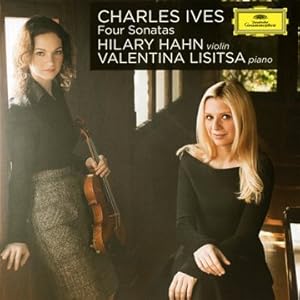
So, there was this online contest to design the best new album cover for a highly regarded classical CD. The contest promised lots of money and high-profile opportunities for the winner. Thus, I suddenly got hooked on the art of designing CD covers and ended up with a pretty cool Hahn/Lisitsa/Ives CD cover that won me first prize, $1000, and a job as head of marketing at Deutsche Grammophon.

Unfortunately, the only part of that paragraph that's true is the "I suddenly got hooked on the art of designing CD covers" part. This is likely a passing phase, but as I detailed in our last episode, a Proper Discord sampling of text-driven album covers got me interested in trying to create pictures with words. I gave that post the clever title, "A few words = A picture = A thousand words," which of course implies that "A few words = A thousand words." Obviously, there are some problems with my math. Aside from the unsettled question of just how many words it really takes to equal a picture, the slippery part of my equation is to consider these "few words" as just words. In fact, many of the "text-driven" covers are just as much driven by elements of graphic design, which is to say that the words are serving as pictures. There's a kind of slippage between medium and message going on, as my hero Douglas Hofstadter would say; in fact, words often (usually...or, perhaps, always) do more than just stand in for specific ideas, people, etc.

They may not always function as pictures, but they also have sonic qualities which can become musical (some might say "poetic"), whether it's via rhyme, meter, alliteration, etc. Words might also have structural properties that create meaningful patterns - like the fact that the following "words" can be interlaced into a fairly tight crossword pattern: Hilary - Hahn - Valentina - Lisitsa - Ives - Violin - Sonatas. So, there are plenty of ways in which a few words might say more than just a few words. They can also say less, but that's a subject for another day.

When I condensed the "Minute Waltz" down to a minute, inspired by its much-maligned title (maligned because people inevitably read mi-'nute as 'mi-nute), I mentioned that I was translating this piece into the "medium of pieces that last 60 seconds." Aside from providing a good excuse for my mischief, it also reminds us that a medium can often be of interest in part due to its defining constraints, another pet Hofstadter topic. Sonnets, haiku, palindromes, acrostics, canons, piano pieces for left hand alone, piano pieces that last exactly a minute: they all offer a special framework which will likely exert a strong influence on the receiver beyond the mere words or pitches. The medium becomes part of the meaning.

And speaking of media, how about the "CD album cover with no artist photos" as medium? When I created my first text-driven cover, I was inspired by the much-maligned font Comic Sans to create a little dialogue with the person holding the CD:


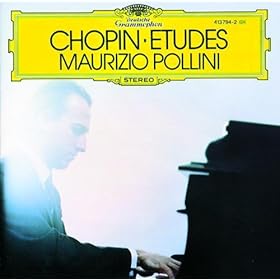
Though it's not a very good translation of Chopin's music (or a very good picture), it's actually a pretty good translation of the subliminal message such CDs used to exert on me. The digital world means I don't buy many CDs these days, but I still have vivid memories of standing in Tower Records on Pennsylvania Av. in Washington, D.C. holding various CDs in hand and trying to figure out what I could afford to take home. And, yes, an image of someone like the legendary Maurizio Pollini on a cover (or even just the image created by the letters of his name) could exert a mystical kind of hold on me. Of course, I would've been insulted to have an album cover openly saying what I was thinking, which is why the subliminal works better than the superliminal.


...but I'd say my cover is a pretty accurate translation!

OK, but how about an even more restricted medium - the medium of CD album covers that resemble medicine labels? Pretty strange way to go, but Hofstadter's Le Ton beau de Marot has many examples of seemingly arbitrary constraints into which ideas are poured. Check out this curious bit of poetry:
Washington Crossing the Delaware 
A hard, howling, tossing water scene.
Strong tide was washing hero clean.
"How cold!" Weather stings as in anger.
O Silent night shows war ace danger! 
The cold waters swashing on in rage.
Redcoats warn slow his hint engage.
When star general's action wish'd "Go!"
He saw his ragged continentals row. 
Ah, he stands – sailor crew went going.
And so this general watches rowing.
He hastens – winter again grows cold.
A wet crew gain Hessian stronghold. 
George can't lose war with's hands in;
He's astern – so go alight, crew, and win!

Not the most elegant of sonnets, perhaps even uglier than the average medicine label - until you consider that every single line is an anagram of the poem's title! I know, right? 


I cheated a little bit with my "medicine CD" (see below) by making up my own imaginary recording, though a recording of these Bellini songs does exist. I also cheated by indulging in some superliminal counter-marketing on my cover ("may cause drowsiness," etc.) because it was just more fun that way. Otherwise, I tried pretty hard to work within my self-imposed constraint: create a "working" album cover that looks like a medicine label. It's nice that Bellini actually sounds like the kind of name a drug company might give a product with a mouthful of a generic name like Composizioni da camera. I also had some fun inventing the ominous sounding company LaSonn Ambula (Google Translator tells me Ambula means "outpatient!"), which somehow reminds me of the fictitious drug conglomerate Devlin McGregor from The Fugitive - and which also happens to be the name of one of Bellini's most famous operas.


Since that opera is about a sleepwalker, it ties in nicely with the idea that Bellini® is a sort of natural Ambien - at least for pianists. Note that the pianist in this "recording" is named after a famous Puccini aria about not sleeping, so even the imaginary pianist has been translated into this druggy world; Giuditta Pasta is not imaginary, though also not available for recordings; she is the singer who debuted the role of the sleepwalking soprano in 1831, which I might have included as the expiration date on these songs if I'd been more clever.

If medicine label CD covers is too far for you as a worthwhile medium, let's re-visit my crossword design from the last post:


Though it's coincidental, surely there's some value in seeing all these lovely words cross so nicely, a sort of graphic representation of what happens when a phenomenally talented fiddler and pianist cross paths with a great composer. However, as an album cover it's a bit bland, so I decided it might be nice to cross this "word image" with some photos, and here we have my award-winning final design: 


You might say (might...) it's my own "cover" of this cover:


And that about covers it...

Tuesday, March 27, 2007

Hyperspace

A month into my blogging career, I have to say that one of my favorite things about keeping this kind of journal is hyperlinking. I don't just mean the regular sort of blogroll links that connect blog to blog, but I love having the ability to connect thoughts so easily from one post to another. My psychiatrist wife has always thought I had a touch of A.D.D., but I like to think of it as a mind that is constantly hyperlinking. Of course, on some level, making connections from one idea to another is the way intelligence works. My hero, Douglas Hofstadter, is a researcher in the field of artificial intelligence (AI) and much of his research has focused on analogy-making as a sort of higher level sign of intelligent life. It should be no surprise that he likes to address AI questions by using all sorts of analogies and illustrations from the worlds of math, music, language, art, etc. What interests me the most about that is the idea that creativity is also so often about making connections, something I happened to touch lightly on in a recent post.

The farther out I get from school, the more I seem to find myself interested in all sorts of different creative pursuits - in addition to musical performance, this has included writing music, writing poetry, translating libretti, making movies, blogging, etc. I don't make any great claims when it comes to creative abilities, but I'm always struck by how often the crucial creative moment comes when the mind makes an unexpected or previously unnoticed connection between two somethings. It's kind of like an accident you've been designed to make. I once would've assumed I needed much more specific training to try some of these things out (and more training wouldn't hurt), but I've been surprised to discover that finding successful connections is often more intuitive than I would have expected. It's not much different than finding that perfect analogy.

When I was translating Gounod's The Doctor in Spite of Himself, the moments when just the perfect rhyme would appear always felt like little miracles in which I suddenly married the right word or phrase with the right moment. In the case of translation, as Hofstadter beautifully illustrates, there's a sense in which one is always looking for the perfect analogy - how to express in English what Gounod's librettist expressed in French, for example. But whether it's writing a symphony or choosing colors for a quilt pattern, I think the heart of the creative process is generally the same. One's accumulated knowledge is used to help inspire the most interesting connections. It stands to reason that the creative mind is conditioned to be looking for connections, whether that's the task at hand or not, and I like to flatter myself that this is a reason I don't always focus well.

I don't mean at all to belittle the notion of more serious kinds of A.D.D., but one of the ways in which I have always experienced attention deficit has been with reading fiction. Attention-distraction is probably a better way of putting it, but when I'm reading a long narrative (especially novels), I find it hard not to keep thinking about things I've already read when my enjoyment would be better served by focusing on what I'm reading. I'm always worried that I've missed something, some important connection. That doesn't mean that people who read fluently aren't thinking about what they're read - it makes no sense to think of 'reading' a long work if there's not a running thread of thought - but I struggle more than I should with keeping my topmost focus in the right place.

This can also manifest itself when watching movies, which is probably a reason that I tend to prefer watching movies I already know. There's naturally less concern about 'missing something.' On a fairly trivial level, it used to drive me crazy to be watching a movie or TV show in which a familiar face showed up that I couldn't place; I might spend days trying to figure out where I'd seen that actor before. I used to dream about something like the Internet that would allow me simply to look up actors and see where else I might have seen them. Now that I know the answer to such questions is just a few clicks away, I find it easier not to get distracted by such things. So, this brings me back to my love for links and hyperlinks. They can actually put my hyper-mind at ease.

Even before the Internet came around, I had fallen in love with Apple's old Hypercard software which had it's own built-in programming language. I think it's also notable that I've always preferred in-text parenthetical citations to those bottom-dwelling footnotes. There's a sense in which a hyperlink functions like a really amazing and more transparent parenthetical reference. The reader is invited to dig deeper into an idea, find a definition, or follow a citation as part of the natural flow of the prose. At their best, hyperlinks can let a reader make some of the same sorts of connections that the writer has made.

Yes, there's also something to be said for a good writer taking the reader on that journey through skillfully constructed prose that connects all the right dots without requiring links; we certainly have a general bias towards the idea that a gifted writer should lead us and not just provide a bunch of data that can be connected in various ways. As with just about everything, the ideal probably lies somewhere in the middle. Again I return to Hofstadter's Le ton beau de Marot and it's patchwork structure. There's great delight in reading the chapters sequentially and I believe the author put a lot of good effort into connecting some very diffuse content. Still, many of the chapters also function pretty well on their own and the structure has a freedom about it that invites subsequent browsing. There's no question that I find this kind of reading more naturally pleasurable than reading fiction.

To summarize, let's just say that I waited more than half of my life for the Internet, and I'm so glad it's here - it fits my way of thinking to a T. Perhaps a better-ordered mind could keep a journal and also keep track of all the internal connections from entry to entry, but I much prefer this. That may mean I'm lazy or it may mean that I'm naturally creative. Or both. For me, it's great fun to be able to make those connections more explicit - and, yes, to send readers off to other interesting hyper-spaces. I've been saying for awhile that it can only be a matter of time before most textbooks are delivered online (or ondisc) exclusively because of the power of hyperlinks. For music textbooks particularly, with all the multimedia content, an online synthesis makes so much more sense than a big fat textbook accompanied by a big fat anthology of scores accompanied by a set of 12 CDs, etc. And, the resulting 'package' would look a lot more like how I think.

Wednesday, August 22, 2012

Gateway to Insanity

There's nothing like a meandering path that takes you somewhere special. For example, many years ago I basically flipped a coin in choosing one musical festival over another, picked a piano trio to play, had my assigned cellist turn out not to be there, and then was assigned a new cellist...who is now my wife. We now have a daughter in music camp out in Western Massachusetts which led us to an afternoon of Sunday shopping in charming Northampton where I came across a book I've wanted to read for years. Vikram's Seth's The Golden Gate is a novel-in-verse set in 1980s Silicon Valley but modeled on Pushkin's Eugene Onegin, especially in its use of the peculiar Onegin stanzas devised by the "Russian Shakespeare." In Le Ton beau de MarotDouglas Hofstadter raves about The Golden Gate, gateway for him to Eugene Onegin which becomes the second most important case study in Hofstadter's wide-ranging study of translation.

I've now read Eugene Onegin a few times in this dazzling translation, and I've intended to read The Golden Gate for more than a dozen years, but somehow never got around to hitting the "buy" button on Amazon or tracking it down at a local library; seeing it on the shelf at The Raven conquered my irrational inertia, and now I'm happily flipping page after page.* My only slight disappointment is that Seth's book (or any good translation of Eugene Onegin) is a perfect candidate for e-book reading on a smartphone or tablet since each sonnet would nicely fill a screen, but it's only available in paper form. Oh well...it's still delightful even only 160 or so sonnets in. My mind is rhyming in iambic tetrameter even when I'm not reading, which is a problem I've had before.

Unfortunately, I also made the mistake of wondering if an Onegin stanza could be fit into a single, 140-character Twitter post. I remember wondering this back in #operaplot days when I successfully tweeted several limericks, but if you do the math, 140 characters divided by 14 lines leaves only 10 characters per line, and that has to include spaces and line breaks. Iambic tetrameter demands 7-9 syllables per line so it's really impossible, right?

However, it occurred to me that using texting abbreviations might make the task just possible, and OMG! (which I'd interpret as "Oh my goodness" since that yields an extra syllable), voilà:


It's pretty ugly to look at, but it's Tweetable, although Twitter doesn't really let you use line breaks, so it ends up looking like this:
IOU a tiny sonnet of ≤ 140; In it 14=143 IIRC SRSLY I ineptly had U ROTF LOL once b4 @my TMI No IMO my MO I AKA admiration ≠ U & yet WYSIWYG
I do enjoy the oddly formulaic juxtapositions of 140, 14, and 143 and the 3-line set of "TMI, IMO, MO I," not to mention that any sonnet ending with "WYSIWYG" is pretty awesome.

If you're wondering how to read it, here's a "translation." Note that every line should begin with a stressed syllable and that line 5 requires "remember" to be accented awkwardly on its first and third syllables. "Seriously" should also get a secondary stress on its third syllable.


IOU a tiny sonnet
of ≤
140; In it
14=143
IIRC
SRSLY I ineptly
had U ROTF
LOL once b4
@my TMI
No IMO my
MO I
AKA admiration
≠ U & yet
WYSIWYG

I owe you a tiny sonnet
of less than or equal to
one-hundred and forty; in it
Fourteen equals "I Love You."
If I remember correctly
seriously I ineptly
had you rolling on the floor
laughing out loud once before
at my "too much information."
No, in my opinion, my
modus operandi I
also know as admiration
does not equal you and yet
what you see is what you get.

OK, it's not Shakespeare or Pushkin...or Seth, but it sort of makes sense as a slightly desperate sonnet from a poet prone to ridiculously flowery flights of fancy. It's a bit pitiful since it seems our hero knows his recipient is a harsh critic; he's apparently trying his best to keep this tweet both short and sweet, but he is who he is.

It's also not quite an Onegin stanza since that requires iambic tetrameter which would add an extra unstressed syllable to the beginning of each line, but chopping off those 14 syllables was really helpful. The astute among you will further note that I've interpreted AKA as "also know as" instead of "also known as." So sue me. My first line takes up a luxurious 24 characters, and I had to find as many ways as possible to abbreviate thereafter. Honestly, I don't think I'd have pulled it off without that "less than or equal to" sign. That's six syllables of pure, 1-character gold.

I later realized I hadn't even thought about abbreviated proper nouns like UK, USA, IBM, etc., but textspeak is a perfect fit for Twitter anyway. Still, I think this is my first and last Onegin sonnet of 140 characters or less.

But I also wondered about a trimmer-style sonnet, and fairly quickly managed the following (I was home sick yesterday, so I had a little time on my hands):

A sonnet
in tweet?
I'm on it
A feat!
140
is short. See
each line
assigned
li'l more than
3 beats.
RT's
will pour in
for me.
You'll see.

If tweeted like so:
A sonnet-in tweet?-I'm on it-A feat!-140-is short.See-each line-assigned-lil' more than-3 beats.-RT's-will pour in-for me.-You'll see.
...this actually comes in at a highly efficient 134 characters. Note that I've kept the Onegin stanza rhyme-scheme with its charming variety of masculine and feminine rhymes. For those not in the Twitter know, "RT's" stands for "Re-tweets," which is the Twitter way of sharing posts. Also, you'll note that "140" in this case should be pronounced as "One forty." It's true that this rhyme scheme has quite a different flavor than Eugene Onegin with only 2-3 beats per line; in fact, in this regard the poem is much closer in spirit to Clement Marot's A une Damoyselle malade, the 28-liner beginning and ending with "Ma mignonne" that is the central case study in Hofstadter's book.

My favorite felicitous detail in my "Mignonegin" sonnet comes with the phrase "li'l more than / 3 beats"; I chose "li'l" to create a nice triple rhyme with "will pour in" but was slightly bothered by the fact that none of the lines actually has any more than 3 beats. EXCEPT, one could say that the contraction "li'l" has perhaps a little more than one syllable, meaning the phrase "li'l more than" contains something like pi beats; it thus becomes the very line to which it refers. I realized that while struggling through the last leg of my morning run, and that put a much-needed hop in my step.


* I could quote favorite turns of phrase for days, but here's one of Seth's couplets that I particularly admire:
Thus by default the fault is Phil's.
Jan sets her gaze at Look that Kills.
More MMmmusing Onegin stanzas:

Monday, July 9, 2012

Minute by minute

That last post was supposed to be an introduction to these new "Minute Waltz" videos, but the introduction became its own unwieldy post - so back to some lighthearted Chopin, and some even more lighthearted "interpretations." As I anticipated, my "Minute Waltz in a minute video" inspired some tsk-tsk'ing. A Twitter follower commented:
Impressive, yes. like it? no. There is no time to enjoy the melody and harmony. Don't think Mozart would like it.
I suppose I can't really disagree with this assessment, but I'd still like to pick it apart a bit, if only to help answer the question of why I accelerated Chopin's poor little waltz in the first place.

First of all: Impressive? I'd say, "No." I just took some audio from a poor, hard-working pianist who'd done the work of learning the notes and interpreting them with sublime artistry, I hit a virtual switch and, voilà, 108 seconds was sliced to 60. At least this guy you see below worked with real fingers in real time (notice by the way how he, too, feels compelled to post multiple disclaimers ahead of time [you have to turn the annotations on], just as I did in my previous Chopin post; the moral highground is pretty intimidating in classical music):


As for my video, I'm more impressed with the nifty visualization, with its time counter, sweeping second hand, sweeping composer eyes, and newly added spinning score - they all provide useful visual analogues for thinking about this as a high-stakes, one-minute event.


But our concept of impressive is significantly based on an understanding that a real person with real fingers has played all those notes in time, and most of us can instinctively tell that this performance isn't real. It's too fast to be impressive! As it happens, my very first two blog posts (ever) focused on related topics: 1) my debut post about the Joyce Hatto scandal stressed how much our listening is colored by what we know or think we know about the performers, and 2) my second post discussed how much musical meaning can be shaped by our understanding of the technical challenges involved. It's hard to evaluate such music outside the context of how humans can and ought (?) to play. (That parenthetical question mark indicates my eyebrows being raised suspiciously.)

Now, as for the objection raised above: "There is no time to enjoy the melody and harmony. Don't think Mozart would like it." We can dismiss the Mozart point, because who knows? (Although I think Mozart would've liked it.) But what about this "no time" to enjoy the melody/harmony? First of all, this piece does not feature any particularly noteworthy harmonies (not by Chopin's standards) and they only change once per bar, which isn't that fast, even when accelerated. More to the point, we all know the melody and harmonies quite well, so certainly we can take them in a little more quickly than usual. Of course, the "no time to enjoy" really is code for "there isn't the optimal amount of time to enjoy," and it's a fascinating topic in itself how often reviewers (myself included) use this kind of all-or-nothing language to describe something less than ideal. It's also curious how we train ourselves to think that the "optimal time" should be a constant, no wonder how well a work is known.*

I think part of what's going on is that the almost unreal tempo sends a message to our brain that musicality is being sacrificed for velocity, but is that the case here? The performance I stole is beautifully proportioned and features several moments of rubato, so even well above the speed limit, there's still time taken to take in the scenery. Proportionally, this is not at all a rushed performance - rather, its particulars have been translated to a different time frame. This brings me back to some of the issues raised in Douglas Hofstadter's Le Ton beau de Marot. Rather than transposing this waltz for violin or tuba quartet, Hofstadter might say it's been translated to the medium of "pieces that last 60 seconds." (By the way, several of Chopin's preludes come in easily under a minute. Go to the iTunes store, and you can listen to all 24 seconds of Op. 24/10 for free within the 30-second preview limit.) Maybe if you drink enough coffee before listening, the medium will be just right.

Still, why translate this piece to such a medium when Chopin definitely never intended it to last a minute? I'd say there's some poetic justice here. There's little doubt that this waltz has received exponentially more performances and notoriety than it would have if it were known only as Waltz in D-flat Major, Op. 64, No1. Well, Mr. Op.64/1, you gotta take the good with the bad. The association of this music with 60 seconds may be unfair, but the title is so culturally ingrained, it's hard not to think about it as a one-minute ride, just as it's hard to disassociate Beethoven's Op.27/2 from moonlight - and, as often, there's some truth in the stubborn title; turning it into a minute waltz is on the edge of possibility, even it leaves little opportunity for musical subtlety, at least for us humans. [Impudent Question(s): Why does everything have to be so subtle anyway? Can't Chopin just let loose every now and then?] Virtual engineering makes it more than possible, so why not give it a try? It would be almost crazy if I didn't do this. 

You may recall Stephen Hough complaining that "it's impossible to play [this piece] in 60 seconds unless you crash brutally, meaninglessly through the central section," but I couldn't help noticing how unhurried that section is in my video above; could I borrow some time from there to ease up the outer sections? So, I played around with the tempi just a little, slowing up the outer sections and speeding up the middle so that they end up being closer to the same pulse; I hoped this would make the outer sections seem a bit more realistic, but I think more harm is done than good as the middle section really does seem too giddy now, if not brutal. Here's what this more tampered version sounds like:


Unfortunately, this now left me with two different interpretations of the piece that each last exactly 60 seconds, but with different interior proportions. How could I resist playing them simultaneously? Thus, in the video below, we have the following going on with reference to the ABA structure:
  • Top Score/Right Channel: proportions are roughly 22+16+22
  • Bottom Score/Left Channel: proportions are roughly 20+20+20


It's not clear to me if I'm the only person in the world who gets such a kick out of this kind of thing, but I find it genuinely gratifying to listen to and watch. It is, in some respects, a kind of mensuration canon (same tune moving at two different speeds), though without anything like the meticulously worked-out vertical intersections conjured by Ockeghem and others. There is also an analogy to the kinds of phasing techniques pioneered by Steve Reich, but again, without nearly the same attention to detail. (There's also an analogy to viola duets, but let's not go there...)

And yet, the sound of the two parts chasing after each other is invigorating and, I believe, can provide the same kind of pleasure in following multiple melodic strands as more traditional counterpoint. I especially enjoy hearing the parts join together briefly at the midway point and the extra long trill starting at 0:35 is cool, too. At other times, it's just like a kooky echo chamber; listen to that almost-together run at the end. And even if you hate it, it's only a minute of your time.

If you do like it, you might want to sample the following from my shady past:

* There's good reason for thinking an optimal tempo should be constant; in the classical tradition especially (though broadly true for most traditions), music exists in time in this sort of eternal new, even though we so often listen to music that's old and familiar. Thus, that deceptive cadence or that rhythmic disruption can be "surprising" every time, even though it's not really surprising at all. (See just about everything I've ever written about The Rite of Spring. Of course, this can also be true of events in novels, films, etc.) In fact, an effective performance is often judged on its capacity to get these fully expected "in the moment" moments just right, and sometimes a microsecond's difference of timing or a tiny shading of timbre will cause a reviewer/listener to say a theme was not given "time" to breathe. And (I think) the better the listener knows the music, the more likely he/she is to insist that the spontaneous moment conform to a preconceived notion of how it should be executed so that it sounds spontaneous. Such notions are conditioned, to some degree, by virtually everything that's ever happened in our musical past, both personal and culturally. This merging of past and present is not unlike those Douglas Hofstadter's self-referential loops, which loops us back to the previous post.

Friday, March 27, 2020

Bach Day #7: Bring out the Canons!

So I've been blogging and posting multimedia for more than thirteen years, and honestly there were a few times that I thought I would hit the big time. Not yet! However, my two steadiest performers over the years (the "big guns," one might say) have been two relatively simple animations I created of canons from Bach's The Musical Offering, so I knew they'd figure into these eleven days of Bach.

In fact, of the almost 900,000 YouTube views I have as of today, more than a third of them are for a video of the endlessly rising canon, the "Canon per tonos." (The title "per tonos" refers to the fact that this canon rises by a whole tone each time through.) To my great surprise, this video has amassed more than 340,000 views. My version of the crab canon has just over 200,000 views, so together, that's well over half of my YouTube audience.

Both videos are, from my point-of-view, more notable for audio tricks I played than for the animations, adorable crabs aside. For the crab canon, a single melody played against itself backwards, I actually recorded the melody only once and then reversed the audio to create the second voice. A YouTube commenter alerted me not too long after I'd posted it in 2008 that it had a wrong note in the score and recording. Ugh. Fortunately, that only took me a little over ten years to fix. That wrong note has been seen and heard many times!

As for the endlessly rising canon, I used a technique suggested by the great Douglas Hofstadter in Gödel, Escher, Bach. Because the basic structure is that the 8-bar canon modulates up a whole step each time through, a performance taken to its logical conclusion would actually run out of playable/audible pitches. Hofstadter's idea was to use the Shepard Tone technique by which the constant, gradual introduction of a lower octave occurs while the original octave fades out above. If executed correctly, the listener doesn't really notice the switch, but finds that the music, having risen an octave, is right back where it started. Here's a version of a Shepard Tone illusion created by a Wikipedia contributor:


Notice that the tones seem to be descending continuously, but they never run out of space. The effect is often compared to a barber's shop pole. Of course, applying this effect to a musical composition is something quite different.

My first attempt "to Shepard" Bach was posted more than twelve years ago, and though I'm pleased with it, I've always intended to fix some things. Among the problems with the original are a few misspelled enharmonics, the stubborn refusal to change clefs (resulting in some wacky ledger lines, although it makes the overall "rising" effect clear), and most importantly, the failure to go beyond two full times through the sequence. In the decade that has passed, there are far more novelty YouTube videos that go on for hours, and this was an obvious candidate for that approach (though I stopped at half an hour).

So, the truth is I had all these thoughts three or four days ago and figured it wouldn't take long to make a new version. As with so many projects, I mapped it out in my head and thought, "just do this, this, and this" and I'll be good to go. But I've realized that, though it's a straightforward project in many respects, the details, details, details kept multiplying. I also had to make choices about how much I wanted to copy things I'd done in the first video and where I wanted to do something different.

The two biggests tasks were recreating the score (in my beloved Lilypond) and making a new recording. I actually thought about sticking with the original acoustic guitar version, as it has a nice mellow quality that's suitable for endless listening. But I thought it would be more fun to try something new, since that video is still available. After a lot of experimenting, I felt the virtual harpsichord provided the most authentic and satisfying effect, though the sound is perhaps a little more annoying. I mean, it's a harpsichord sound. (I'll leave the Beecham jokes out of this.)

Creating the cross-fade effect is trickier than it sounds, and after much tinkering, I was also reminded how different the results can sound depending on the dynamic range of the speakers being used. But I think I've settled on something that basically does the job. It really does keep rising without going anywhere, though it's not so hard to hear why that's happening.

As for the score, I struggled over many decisions. Unlike the previous version, I finally decided NOT to use key signatures. Bach's version only shows 8 bars, which clearly start in C Minor, but with no signature. He doesn't even include the middle voice! The performers are supposed to add in the canonic voice, which follows the lower voice by one bar and a fifth above, and then work out the transpotions for each repetition.


Although key signatures are a nice way to signal change of tonality, the music is so chromatic that it actually reads a little more smoothly without key signatures since so many notes end up changed anyway, especially as the modulation is prepared for the next key. Also, after flirting with the elegance of alto clef, which mostly works beautifully for the middle voice, I finally decided to stay with treble and bass clefs only, with discreet changes along the way, simply because more people read each fluently. I did keep a couple of quirky features from before: the barlines do not connect the staves (it just looks cleaner this way) and I kept the little cue note at the end to show the new tonic that is coming.

Well, that's surely more than anyone wants to know about the endless hours I put in this week creating this endless video, so perhaps I should just finish with the video. Tomorrow, I'll write a bit more about the work itself. If the last two days focused on Bach at his most jovial, this is surely Bach at his most austere and cerebral. And, spoiler alert: Frederick the Great's theme (on which all of The Musical Offering is based) is....not that great. But we know Bach liked a challenge....


UPDATE: The morning after posting this I listened to the whole thing while making a big breakfast - and discovered a mistake (a volume irregularity in the middle) ! It has now been fixed.

UPDATE #2: There was another mistake, but thanks to the great ears of a great friend, it has been fixed as well, along with a few other minor stylistic tweaks. Putting something this complicated out so quickly is kind of insane, but it's how I roll.

Saturday, March 31, 2007

The pros of constraints

This list of demands from the artist Christoph Büchel is hysterical. He's in the midst of an ongoing feud with MassMOCA about the completion of an enormous installation. The demands can best be summarized by this one: "There is NO negotiation about the scope of the project. It will be realized as proposed." Never mind that the scope of the project requires enormous expenses that he essentially wants to remain uncapped. For the purposes of this post, what interests me most about this is the idea that the creative artist's vision should be final. Note, by the way, that much as a composer depends on a performer to bring his work to life, Büchel is the type of artist who also relies on many others to do much of the physical work of putting his "artworks" together. He's not just painting a picture in his studio and then looking for someone to display it. He's involved in a highly collaborative enterprise, but he's insisting on complete control of the process and, effectively, the costs.

What interests me is the question of whether we should assume that "the creative customer is always right." Of course there's no simple answer to that, but it seems to me there's a pretty basic assumption out there that an artist must follow the old "to thine own self be true" principle. In a discussion about the ethics of pandering to an audience over at Sequenza21, the composer Galen H. Brown writes, ". . . how do I decide what kind of music to write, given the preferences of the audience, my desire to be loved, and my aesthetic preferences? The short, easy answer to that question is that you should write whatever the heck you want to write and be happy with what ever audience happens to like it."

Now it's much too simplistic to say he means he doesn't care about the audience, but both Brown's quote and Büchel's demands touch on another of my favorite Hofstadter-inspired topics: constraints. Le ton beau de Marot revolves around efforts to translate a tightly rhymed and metered French poem into English, and Hofstadter uses a host of solutions to show how creative and satisfying the artistic results can be, even when the artist is simply translating within a severe set of constraints (rhyme, meter, literal meaning, mellifluousness, etc.). Of course, the point is that translating like this isn't simple and that finding good solutions involves a special sort of creativity. Constraints come in all shapes and sizes. They can include such things as the size of a canvas, rules of counterpoint, principles of perspective, time signatures, budget for scenery, size of a stage, response of an audience, demands of a patron, union-specified rehearsal time, etc. Sometimes constraints are incredibly frustrating and annoying, but constraints also help to provide essential context for understanding most art.

Again, there are no hard and fast rules about when constraints are good or not, but I can't help but think there's something unhealthy about Büchel's attitude; Brown's quote also suggests a tendency for the modern composer to assume that he's writing much more for himself and art than for an audience. I suspect one advantage that contemporary theater has over music and the visual arts is the more natural understanding that the audience is part of the collaborative process. Out-of-town tryouts and rewrites are all about seeing how a show plays in front of a live audience; this isn't necessarily a question of pandering, which Brown is correct to be wary of, but of seeking out a real communication. Though every artist is constrained by budget to some degree, I'd guess that playwrights and directors accept that more naturally as part of their creative context than do composers and visual artists. I know I'm simplifying Büchel's situation, but his refusal to collaborate with MassMOCA makes me wonder how interested he is in collaborating with his audience.

It does seem counterintuitive that constraints might be a good thing for art, but the example of J. S. Bach provides ample evidence. Not only did he delight in problem-solving within the tight framework of counterpoint, but most of this career was spent writing music that he was told to write for specific purposes. Yes, he chafed against this to some degree and maybe we could wish he'd had more freedom at times, but you can't argue with the results. And, yes, someone like Beethoven fought against constraints to a great degree, but the struggle in his music is significantly defined by the tension we feel against those very constraints.

Now if I could just set myself tighter constraints when it comes to the length of these posts . . . (Fortunately, my daughter's Saturday morning orchestra rehearsal is coming to a close, so I shall surrender to that constraint and hit Publish.)

[UPDATE (later that night): As evidence of the modernist disdain for constraints, I submit some of the comments on this Sequenza21 thread. I don't believe that all contemporary composers think this way, but this discussion about Schoenberg's and Debussy's emancipation of dissonance and consonance pretty quickly descends into a lot of talk along the lines of "Music is free, so was dissonance. It was musicians who were in chains." Some of us feel like those "chains" made for some pretty nice music. Of course, Schoenberg pretty quickly replaced the tonality chains with his own 12-tone chains, so I guess he didn't have an issue with constraints in general; I guess the moment you don't need chains is when you've got a Cage.]

[UPDATE 2 (the next morning): The NY Times has an article about the modernist composer George Benjamin which includes the following bit of refreshing apropos-ness:
In recent years, Mr. Benjamin has been immersed in an exploration of contrapuntal writing, especially canons, in which a voice is imitated by one or more voices at a specific interval or pitch. . . .“I used to be allergic to the idea of canons,” Mr. Benjamin said, especially the “didactic element.” But then he was hooked by the challenge of liberating his imagination through the constraints of the technique. “Shadowlines” (2001) was one result.]