" "

Monday, March 12, 2012

Ballade Blogging, Part 4: Morphing Magic


A week or so ago, Performance Today's Fred Child gave a nice little lead-in to Hindemith's Symphonic Metamorphosis on Themes by Carl Maria von Weber, suggesting that we'd be hearing the musical equivalent of one of those morphing animations. Well, it was sort of a nice analogy except, as often happens when people try to compare music and just about anything, the analogy breaks down a lot. The morphing effects Child mentioned (he even gave an off-hand example of an airplane turning into something completely differently in a manner of seconds) don't really resemble much the way in which Hindemith treats Weber's themes - at any rate, I don't recall any passage where a Weber tune suddenly becomes something totally different in a few seconds; metamorphosis suggests a more gradual unfolding of change, and that's the way I think of Hindemith's contrapuntal explorations of Weber material. (Admittedly, it's not a work I know well.)

But last week, when I first read through the Chopin F Minor ballade with the thought of re-learning it, I experienced something much closer to a sudden shape-shifting. As I've said, I'd last performed the ballade more than twenty years ago, and hadn't really even thought about it very often since, so I was reading at a conservative tempo and meeting some resistance - sort of like cutting through an overgrown thicket to revisit a place from long ago. "Oh yeah, that part." "Oh right, I remember dreading that passage!" Then, maybe in part because I was playing a bit clumsily, the music morphed into something that caught me completely by surprise.

First, it's worth mentioning that this ballade has one of the greatest openings of all-times (though the opening of Chopin's own Barcarolle is even better!) - one of those out-of-nothingness, magical entryways that immediately transports us to another world. Most of the magic comes by way of the beautifully unfolding texture, since the melody and harmony are quite unremarkable. [hear/see below.] The spell that these seven bars cast turns out to be a deceptive sort of enchantment, though; after settling warmly into a C major cadence, a single C pivots us into a lonely, searching tune in F Minor, and the magic is gone. As I recall, this opening didn't quite make sense to me all those years ago; it seemed too unconnected to what follows. But, that's not my morphing story.


So the searching tune searches here and there, gets varied some, meets up with some contrasting material. Now, skip ahead to about 5:34. We've been in the relative major of A-flat for awhile, but chromaticisms intrude, remnants of the "searching motif" return, leading to a defiant A-flat Major outburst at 5:50, and then - well, as I experienced it that day last week, I realized with surprise that we were back in the enchanted passage from the opening, though now in A Major and with darker undertones. (We're not falling for that again!)


I don't know why I'd forgotten that the opening is reprised here, but I do think Chopin sneaks it in awfully well. I'm pretty sure I was at the end of the final bar shown above before it dawned on me what happened. It's certainly possible I'd added an extra layer of obscurity with some chromaticisms Chopin hadn't thought of (although those R.H. F#'s against the L.H. Fx's in the ritard bar are something else!), but the reprise does come out of the blue.

The deception is helped by the sudden shift from A-flat to A Major (4 flats to 3 sharps!), those odd little chromaticisms in the ritard bar, and the fact that the opening material is so simple melodically (it just begins with repeated eighth notes) that we don't really notice it's being anticipated at 5:50. Also, the first note of the tune is left out when it sneaks back in at 6:04. So, like any good morphing animation, the return happens both gradually and instantaneously. The fact that the opening section doesn't really "go with" the rest of the piece is also part of the effect - morphing between two closely related ideas would be no great trick. Yes, there's a ritard leading into the reprise, but I don't think it's a "hey look, we're back" kind of thing - it's more about being uncertain, turning around slowly and backing into something half-remembered. Pure magic.

Unfortunately, the enchanted music does not usher us safely back home...

Sunday, March 11, 2012

Ballade Blogging, Part 3: The "Cool" Frame


Yesterday's post was quite long, so although I do intend to post every day about my experience re-learning Chopin's Ballade No.4, today's post is just a little intermezzo. In fact, I'm still not going to get into much detail about the ballade itself, nor is this series intended to be anything like an analysis or blow-by-blow description of the music and my attempts to play it. If things go as intended, these blog posts will be more about broader topics inspired by my encounters with the Chopin.

But, a quick-up follow-up from yesterday's post in which I suggested that a common part of the "classical music" experience is encountering "a nice, cool surface under and through which powerful emotions can be contained and released." There are lots of ways to think about what that "surface" might be. I certainly don't mean that the music always "sounds" cool on the surface (though sometimes that's the case), but even the hottest music comes to us in a channeled and carefully framed way.

That probably didn't make much sense, so here's an example. A couple of days ago, I turned on the radio and heard the final pages of Beethoven's "Moonlight" Sonata searing their way through the perfectly modulated climate of my comfortable, leather-interiorated car. When the last few desperate arpeggios had been spent, a calm, almost clinical voice came on to give the particulars of opus number, key, obligatory clarification that Beethoven didn't come up with the "Moonlight" name, and something about a passionate love that might have inspired the music. This passionate love could not have been described more dispassionately - passion here was another detail like an opus number. Although I certainly don't always have this reaction listening to classical radio, on this occasion, the juxtaposition struck me as truly absurd: we had just heard white-hot passion coming straight to us (well, sort of) from Beethoven's revolutionary 19th century heart, and it was immediately followed by a smooth and detached voice that could hardly have been more subdued.

It is very easy (as I have just shown!) to make fun of this kind of context, and there are lots of good reasons to re-think the presentation values of classical radio and the concert hall. But, it's also not easy to say what should come in its place. Do we really want a wild Wolfman Jack of a DJ coming on in tears, openly distraught by Op. 27, No. 2? As it happens, we have a classical morning drive-time "personality" here in the Boston area, and frankly, listening to her bubbly enthusiasms sometimes makes me wonder if I'll start having the kinds of seizures Kramer once experienced at the sound of Mary Hart's voice. It's not easy to match up to the intensity of Beethoven, and do we really want that anyway? Doesn't the cool surface do us a nice service?

This is supposed to be a short post, so I'll close by showing a couple of videos featuring two of our greatest living advocates for classical music, Alex Ross and Jeremy Denk. True, each is known more as writer than speaker, but I think we can safely stipulate that they both "get music" in the deepest way possible. And yet, here they are, talking about deeply passionate music in modulated, understated tones, coolly walking us around the stuff that fires them. I don't mean this critically - I find myself doing the same thing all the time. (You can hear me getting "wild about Brahms" here.)


[Come to think of it, that Bell/Denk video has a little bit of a "Christopher Guest" thing going on. (Compare with below.) Oh how we need a classical music version of "A Mighty Wind."]


So, I'm still not sure what all I'll be saying about the F Minor ballade this week, but don't be surprised if I end up framing Chopin's astounding "achievement in marrying elegant sophistication of form with unbridled freedom of expression" with words like "astounding achievement in marrying elegant sophistication of form with unbridled freedom of expression." We hold up the white-hot with cool gloves. It's what we do.

Saturday, March 10, 2012

Ballade Blogging, Part 2: Sublimation and the Sublime


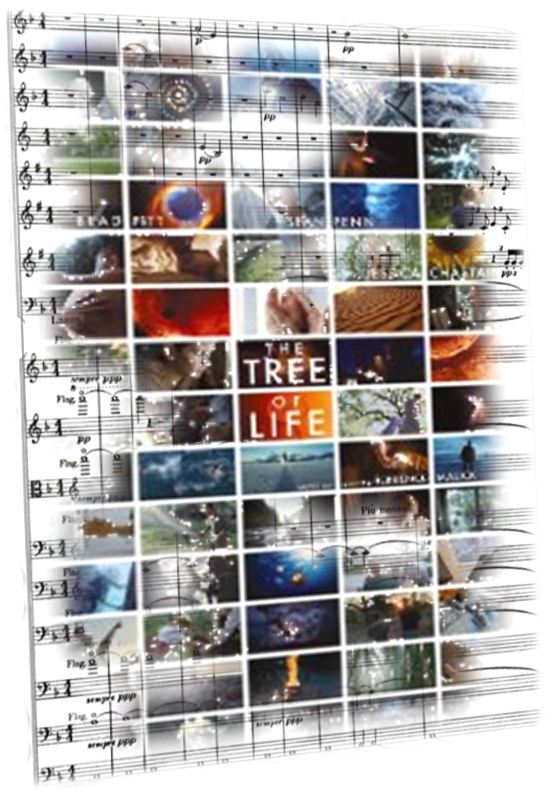
I finally saw The Tree of Life two nights ago and found it an overpowering experience - enough so that I watched it again last night. I'm not particularly interested in the kind of analysis and puzzle-solving that seems to attend most discussions of this film. (I'm also no cinephile, so I don't know enough about Terrance Malick or his place in cinema history to make informed comparisons to other such films - if there are any other such films!) For me, watching it was about as close as I can imagine to experiencing a film like I would a symphony or other mostly abstract musical form, and my desire to see it again right away was mostly about getting back into the world it summons.

Of course, The Tree of Life is full of music, mostly music familiar to me from the classical tradition, and its screenplay has fewer words than the average opera, so in some respects it plays like a big concert with stunning visuals, but I think the "music" of the visuals is what affected me the most. By "music of the visuals," I mean that the succession of images was compelling in the same way the succession of notes in a symphony is compelling - not because they tell me a story, but because they are fully engaging in their own right. But I'm not really prepared to offer much detail about why Malick's visions affected me this way.*

On the other hand, I'm always ready to talk about music - in this case, not so much the bits of Mahler, Smetana, Respighi, Gorecki, Tavener, etc. that serve as soundtrack (though the question of using such music in fragments is worth exploring another day), but the music dear to Mr. O'Brien (played by Brad Pitt), the severe, disillusioned father in the "story." There may not be a lot of conventional plot in The Tree of Life, but we learn a lot about Mr. O'Brien through his relationship to music. Maybe I should be insulted that this cold, sometimes cruel man is most at peace when playing Mozart at the piano, Bach at the organ, or Brahms on the record player, but I think it exposes some important truths about how classical music so often functions.

Yes, these scenes are intended on some level to remind us that Mr. O'Brien, who has a pedestrian job in some sort of factory, never fulfilled his own dream of becoming a great musician, so there's some nostalgia and regret mixed in - and music happens to be a wonderful vehicle for indulging in nostalgia and regret - but we also see that this man who has trouble with human connections can find great pleasure when lost in music. We see this as he's playing the Bach Toccata and Fugue in D Minor, and his son Jack sits nearby, possibly to turn pages, maybe just to listen, but essentially just looking at the organist, perhaps wondering why his father can't connect with him the way he does with a keyboard. In another scene, just as Mrs. O'Brien has started bragging about a success Jack had in school, the father cuts her off to point out a particularly thrilling passage from the finale of Brahms' fourth symphony that's been playing on the stereo as dinner music. We also see Mr. O'Brien in a happier moment connecting with the more sensitive middle son who's trying to work out Couperin's Mysterious barricades on the guitar in imitation of his father's piano playing.

Now, I'm not saying all "classical music" is the same (it's a pretty big umbrella), but a Bach fugue, a Brahms' symphonic movement in the form of a chaconne, and Couperin's intricately textured chains of suspensions all represent music at its most structured - they provide a nice cool surface under and through which powerful emotions can be contained and released. It could be tempting to see this as a negative portrayal of classical music - if the father really has genuine emotions, shouldn't he be wailing away at the blues or at least singing opera? But the classical music experience is often about exploring tremendous depths of feeling in a carefully structured way. I must have written this about The Rite of Spring at least a dozen times, the fact that we usually experience its primitive wildness via a highly trained and rigorously coordinated group of musicians in formal dress.

It sometimes seems that classical music types want to run from this stereotype as much as possible. “No, we’re not repressed; our music was written and is performed by vibrant people about everyday feelings and emotions. People didn’t always sit quietly and reverently while listening to Mozart; that’s just a modern affectation. Please don’t think we’re repressed!” Well, OK, maybe “repressed” is a little strong (maybe?), but there is a kind of sublimation that’s often going on, even if only because so much discipline, patience and control is needed to execute the notes. The words sublime and sublimation are awfully close, after all.

Sir Peter Hall, the great stage director, has written a wonderful little book, Exposed by the Mask, in which he explores the idea that the forms of theatre are what give it such communicative power, whether it's the literal masks of the Greeks, the iambic pentameter of Shakespeare, or the operatic conventions of Mozart. Hall writes:
I am therefore led to believe that performance always has to have the equivalent of a mask in order to transmit an emotion. It must have a mask, even if it is not a literal mask. (p. 25)
and:
Any defined form in the theatre performs as a mask: it releases rather than hides; it enables emotion to be specific rather than generalised. It permits control while it prevents indulgence. Form frees, it does not inhibit. (p. 26)
It's probably not coincidental that this praise for well-tempered artificiality in art comes from a very proper Englishman. Hall even suggests that it's always more powerful to see an actor hold back tears than to have them poured out on the audience, but if that sounds like a "stiff upper lip" attitude that would logically appeal to Mr. O'Brien, it hardly means such power is only available to the repressed. By the way, there are a lot of classical musicians who are pretty shy and introverted; I know because I am one. We may not feel comfortable smashing guitars or weeping openly with Adele-like vocals, but music can still serve to get at something deep inside.

So, finally I come to Chopin's fourth and final ballade, the piece I'm learning and blogging about this week. As with The Tree of Life and its many mysteries, you'll find plenty of people who want to interpret the Chopin ballades to unearth the possible stories that might explain them, but the music connects at a much more visceral, indefinable level; and the F Minor ballade represents, for me, the pinnacle of Chopin's achievement in marrying elegant sophistication of form with unbridled freedom of expression - a marriage which, of course, should be impossible. It's only about ten minutes, but it's also somehow about everything: memory, longing, sorrow, hope, soaring passion and violent desolation. That's why pianists will pour so much hard work into untangling the formal intricacies - in hopes of getting at what's inside. Inside the music and inside of us.

I don't know how repressed Chopin actually was as a person, but I'm probably biased by the amusing, poignant portrait Hugh Grant provides in Impromptu. In this excerpt, Chopin thinks he's alone, playing his first ballade, but it turns out Georges Sand is hiding under the piano. When things are interrupted prematurely [you can skip ahead to 0:40 if you like], we see that she fully gets what his music is getting at, while he is shocked at the brazen invasion of his privacy. He's actually more comfortable lost in his own music, but she makes a completely human connection via that same music.


Later in the film, he confesses to her:
You must think I'm inexperienced, but I assure you, I was baptized... in the brothels of Paris, when I first arrived. But, um... I'm so ill... and I have been for such a long time, and my body is such a great disappointment to me, that I've already said goodbye to it, I'm... not really *in it* any more, I'm just... happier floating about in music. And if I should come back... inside this miserable collection of bones, then I... am afraid that it would probably collapse altogether. Forgive me. I'm ashamed.
Perhaps an exaggerated conception of what the turbucular Chopin came to think of himself, but maybe it says something about what music did for him. This might seem to be another argument for thinking that classical music is about "repression," but I want to suggest that a broad range of people (including the thoroughly unrepressed Mme. Sand) can find essential connections in music that masks itself in elegance and gentility.

At the end of The Tree of Life [this is sort of a SPOILER, although I can't really explain what I'm spoiling], in the midst of images that suggest an end of human suffering and misery, we see a commedia mask sinking into the ocean. There is certainly the suggestion that a time will come when Mr. O'Brien and others are no longer trapped within themselves, hidden behind masks; but maybe we should be glad that, while trapped in this life, the best music has the possibility of reaching those who aren't so easily reached.

* As it happens, this is actually the first movie I've ever watched at home on Blu-ray, so the stunning visuals might have affected me even more since I'd never really seen a TV do anything like this. (We've had an HD TV for about six months; up until now, I'd mostly been impressed by what it does for football.) I do think the fact that Malick's camera is in motion so often has something to do with me seeing "music" in the visual language. The only other film that's really struck me this way is Paul Thomas Anderson's Magnolia, which is possibly my favorite film ever, and which also has a very restless camera (and which also uses music wonderfully, but that's a story for another day).

Magnolia clocks in at more than three hours, and yet time always flies by (or disappears) when I'm watching it. I wouldn't quite say that time flies when watching The Tree of Life. Of course, Magnolia has MUCH more plot than The Tree of Life, and it's filled with dialogue. The scarcity of dialogue in The Tree of Life is surely one reason the visual dimension comes into focus so much. Let's face it, once words start buzzing around, they tend to distract us from the important things.


Friday, March 9, 2012

Ballade Blogging


I'm on Spring Break and have decided to set myself the leisure-time goal of re-learning Chopin's Ballade No. 4 in F Minor, a piece I last played (as far as I can recall) on my undergraduate Junior Piano Recital. Technically speaking, that's more than two decades ago (!). For much of those two-plus decades, my life as a pianist has been more focused on collaboration, but every now and then I remember that playing solo piano rep is how I got into this whole mess in the first place. It's still my first love, and as much as I adore duo sonatas, concerto accompaniments, art songs, opera scenes, and not having to play from memory, there's nothing quite like having the whole thing to yourself and actually knowing the whole thing by heart.

To be totally honest, as age (and too much time online?) seems to diminish my ability to remember phone numbers, passwords, how to spell words, and what to call my children, I also welcome the opportunity to exercise my musical memory muscles. Perhaps that will sharpen the 'ol think system, and maybe I'll even re-capture some of my youth along the way. The truth is, my fingers didn't really remember much of the ballade, having let it sit on the shelf for so long, but it's amazing how starting into it almost immediately put me back in time.

I've given two solo piano recital in the past ten years, and in each case, when it came to choosing repertoire, I found myself inexorably drawn to music I'd played before - not because it gave me a useful head start (I forget pieces really well), but because I feel such connection to music I've played. If my musical life was regularly devoted to solo repertoire, I hope I'd be more adventurous about choosing something new to me, but for now, there's just nothing I'd rather play than...well, the Chopin F Minor ballade.

Actually, I chose it kind of accidentally. On Tuesday, I read a Max Levinson blog post that samples various recordings of the first Chopin etude, a piece I'd heard on the radio earlier that day. I'd worked on it off and on years ago and had decided to let the coincidence of encountering it twice in a day inspire me to learn it for real. Well, turns out my preferred copy of the Chopin etudes was missing from my shelf, so I pulled out the ballades instead, almost by accident. A few minutes later, I was playing these magical opening bars:


And off we go! Even three days in, it's been infinitely rewarding to revisit these pages, and it's also given me lots to think about. Thus, my grandiose plan is to blog about the ballade each day for the next week* - if all goes really well, I might even try to record it at the end of the week, but let's not get ahead of ourselves. If this project manages to get me blogging again and gives me a chance to live with this music every day, that will be something. Maybe I'll even be able to remember my phone number...

* This idea is partly inspired by Jeremy Denk's wonderful 7-day series on a Bach allemande. [Start here.]

Saturday, March 3, 2012

Tears and Jeers

[Kind of a strange, rambling post. On Twitter, I just described it as "Me overreacting to musicians overreacting to journalists overreacting to people overreacting to Adele emoting." Enjoy!]

About a month ago, I'd never heard of Adele. (I don't offer this as a point of pride or shame - just fact). Then, in fairly short order: 1) I helped my daughter use an iTunes gift card to download an Adele album ("Who?" I said); 2) a few days later, Adele won a bunch of Grammys; 3) a few days later, the Wall Street Journal ran a piece about  the musical "formula" behind an Adele song; 4) a few days later, NPR picked it up, and 5) the Journal and NPR stories apparently drove a lot of musicians crazy. I actually missed the articles and the initial batch of negative reactions to them, but 6) Alex Ross brought the subject up a few days ago, by way of praising this 7) Isaac Schankler take-down of the Journal article. Got all that?

Schankler and others objected to some degree to the careless way in which the term appoggiatura was thrown around, but the bigger picture concern from Schankler and Ross seems to be this oversimplistic idea that there's an easy and direct relationship between a given musical device and an emotional response. After detailing some of the scientific findings on which the Journal article is based, Schankler writes:
Therefore, while we see a general tendency for appoggiaturas and tears to be associated, we can’t say that appoggiaturas are a necessary or sufficient condition for causing tears.
and, later:
This brings me to the aspect of the article that I find most offensive, the implication that music is like a science of emotional manipulation through sound, and that it’s as simple as applying a “formula” to achieve commercial and artistic success. Not only is it belittling to musicians and listeners everywhere, it also implies a very narrow view of musical craft. I want to strenuously argue for the value of music that doesn’t necessarily cause tears or chills. 
But I don't think that's fair description of what either the Journal or NPR pieces are setting out to do. In fact, the Journal story frames itself this way [emphases are mine]:
Though personal experience and culture play into individual reactions, researchers have found that certain features of music are consistently associated with producing strong emotions in listeners. Combined with heartfelt lyrics and a powerhouse voice, these structures can send reward signals to our brains that rival any other pleasure.
The suggestion is not that an appoggiatura automatically guarantees any sort of resultNor is there any suggestion that appoggiaturas are some new scientific discovery, as was carelessly assumed by this blogger and others. By using the technical term appoggiatura, the article is in fact acknowledging that this is a familiar musical device, known well enough to musicians to be given its own name.* The Journal story is loosely based on John Sloboda's research that shows listeners tend to respond in a statistically significant way to appoggiaturas as "chill" moments. Of course, the reason that stories like this get run at all (and then get picked up by NPR) is because of more accessible "hooks" - in this case, the Adele phenomenon and a Saturday Night Live sketch featuring office workers who can't resist crying when they hear Adele's Someone Like You.

Schankler is distracted enough by these hooks to complain that "even if the octave leap in Adele’s voice at the chorus of Someone Like You causes listeners to experience chills, there is no evidence this would have anything to do with making people cry." Well, the point of the research is not to distinguish between chills or tears, but rather to look for strong emotional reactions from listeners. Yes, the Journal story is subheaded "Why does Adele's Someone Like You make everybody cry?" but that's just playing off the SNL hook - I don't think the average reader is really going to take the title literally and think the causation is so direct or predictable. Also, there's nothing about the article to suggest that music should always be about causing tears or chills; rather, the point of the article is to focus on one way a certain type of song might do that.

On the other hand, I do think casual music fans are interested in knowing more about why music can have the mysterious and strongly emotional effects it has on us. To be interested in that question is not to think this is music's only goal, but it is certainly part of music's fascination.

Alex Ross expresses his concern as follows:
So many of these how-does-music-work articles and books seem to view music as one thing, as a standardized mechanical apparatus whose tricks can be figured out. And music is peculiarly prey to trivializing questions. Perhaps I'm overlooking stories in other fields, but I don't seem to see headlines along the lines of "How do paintings make us feel?" or "Why do movies with unhappy endings make us cry?" or "What about thrillers makes us tense?" Music emerges from these reports as a reliable servant of everyday emotion, not as a medium of individual creativity.
Well, first, I think there are a lot more people who regularly experience emotional reactions to music than to paintings, but paintings and especially movies (and novels) are, at least on the surface, seemingly easier to understand in terms of craft. Please notice that I say "seemingly." I'm not saying that paintings, movies, and novels might not have infinite layers of complexity, but I suspect the average film-goer or novel-reader has a basic sense of how plot and character work, how dialogue works, even how cameras work, etc. Give someone a camera and some actors and tell them to make a movie, and I think most people figure they could put a bad script together and put it on film. But ask them to explain why a given melody (or phrase disruption or harmonic surprise, etc.) can pull so strongly at our insides - that's tougher. Sure, one might point to the lyrics, to what one knows about the singer, to associations ("it's the song that was playing when we met"), to timbre or dynamics, but ask why the specific notes have such power and I think most people are at a loss.

When I started college as a piano major, I could play a Chopin nocturne or Mozart sonata pretty well, but I couldn't have begun to tell you how to write such a piece. I would definitely have felt more comfortable setting out to write a novel or make a film than to compose a sonata or symphony. That's partly because the craft involved in a well-made film or novel is more transparent; we look through them straight to the story and may not realize how sophisticated the craft is. The craft involved in a sonata is more opaque because there's not necessarily an obvious story on the other side - so it's more natural to think of the craft right away. Everyone knows who composed their favorite symphonies or operas, but many have no idea who wrote or directed beloved movies. I know there are plenty of music students who experience things differently than I did (obviously, my pre-college training was pretty incomplete), but I'd guess the average person who cries listening to Adele would be as much at a loss as I was about how to string notes together. It's tempting to figure that a great tune is just pure witchcraft.

Maybe one reason I found Schankler's critique to be over-the-top is that I think appoggiaturas are a great teaching hook, so I'm sympathetic to the goals of the article. In many years of teaching music appreciation type classes, my two favorite compositional techniques to explore with the uninitiated are appoggiaturas and pedal tones. I've written before about the marvelous power of pedal tones**; as with appoggiaturas, the power is based on a simple exploitation of dissonance to create a certain kind of tension that most listeners easily feel but probably don't notice as a device. As Schankler suggests, these are garden-variety techniques and they in no way guarantee any kind of success; but just as Sloboda believes that the appoggiatura principle is in play during many "chill moments," I've discovered over time that MANY of my favorite passages feature pedal tones.

True, that could just be re-stated to say, "pedal tones often occur at climaxes and climaxes are intentionally exciting passages," but I still found it revelatory to realize how often this simple effect had worked magic on me. Yet, I don't find that "peeking behind the curtain" ruins the effect or is in any way "trivializing." Watch Rostropovich rave about the visceral thrill of a pedal tone and ask if he had grown tired of the effect at this advanced stage of his career. [should start at the 9:18 mark]


A powerful teaching point here is that dissonance need not be, as so many assume, some kind of abrasive or necessarily unpleasing sound; dissonance, in most music, is more about a relative kind of tension.(Yes, I know that musicians know this; you might be surprised how many others misunderstand the word.) Having now looked into Adele's Someone Like You a bit, I'll admit that it's not a great candidate for teaching appoggiaturas. The song I always use in classes is a little less current, but this tune could almost be said to be about appoggiaturas. [Full Disclosure: I used to think I was pretty hip for using this "contemporary" tune, which I've now realized many undergrads have never heard before.]


I know that the circled notes don't all fit the classic "music theory" definition of appoggiaturas - in fact, I begin in class by describing them as "expressive dissonances" to make the point that dissonant notes needn't sound harsh, but that accented dissonances generally carry a kind of expressive power. Nobody hears this song and thinks, "ouch, those notes hurts," but the clashes carry a more subtle, inward kind of hurt. (And, yes, of course this expressive power is significantly rooted in cultural conditioning as well - but the principles of consonance and dissonance also have to do with natural principles of overtone reinforcement/clashing.) But I also introduce the term appoggiatura to point out that this effect was important enough to be given a name - and since the Italian word suggests "leaning," it also shows that there was a kind of sensation associated with this effect. Thus, I'm happy to see the Wall Street Journal jumping in and showing that this is a historically important technique that is both simple and powerful, that works on most of us whether we're aware of it or not.

McCartney's Yesterday is a particularly nice example because the "appoggiaturas" occur along with the rhymes in the lyrics (-day, -way, stay), so that the melody can be said to have its own sort of rhyming. Not a revolutionary idea, by any means, but evidence for why this tune hangs together well and lends itself to sad, reflective lyrics. There are many other reasons this is such a famous, successful tune, including that it was written by Paul McCartney - but I see no problem in helping people see the mechanics underlying these pitches.

These popular science/media reports on music/science research are often clumsy at best, and it's easy to see why that's frustrating, but I think there's more good done than harm in getting readers to think about the craft of musical language. Speaking of which, I've had quite a few students and other acquaintances mention this RadioLab episode on musical language; even though it contains lots of oversimplications that drive me crazy (the discussion of dissonance and The Rite of Spring has lots of issues***), I actually really enjoy the episode and have recommended it to many. Getting people to care about the craft behind good musical invention is a great way to open up ears to even more magic.

* Dan Wilson, the song's co-writer, is quoted by NPR as thinking that the Journal article "talked about how Adele and I had used this secret trick about putting appoggiaturas in, but I didn't know what that was." But the Journal article never refers to the device as a secret trick. There is the suggestion that Adele and Wilson "stumbled upon a formula for commercial success," and "stumbled" is probably an unfair word choice, but the "formula" described involves a lot more than just appoggiaturas.

** I've been teaching myself organ over the past year and playing Sunday services regularly. The most sure-fire technique I know for livening up a hymn is to hold down a single pedal (either tonic or dominant, depending on the desired effect) for an entire verse and let the tension build. (It's also a nice break for my feet which really don't know what they're doing in the other verses.)

*** Wild coincidence! About two hours after typing that bit about the RadioLab episode, I turned on my car radio and found myself right in the middle of the The Rite of Spring discussion from that very episode; interesting, but the storytelling obscures the actual science to an astonishing degree. I'll have to write about that some time...