" "
Showing posts sorted by relevance for query missed take. Sort by date Show all posts

Saturday, April 16, 2011

It Feels So Right (How Can It Be Wrong?)

Jazz musicians supposedly have all sorts of sayings about mistakes. "Do not fear mistakes. There are none." "When you make a mistake, just make it again." "Once a mistake, twice an arrangement." Classical musicians don't get quite that much leeway since we're supposedly all about playing what's on the page. Of course, some mistakes are bigger than others. One of the skills I think I've developed pretty well as an accompanist is avoiding those BIG mistakes that everyone can hear. (And, believe me, I remember the BIG ones that I fail to hide.) It has to do with anticipating when something bad might be about to happen and bailing out before the disaster. If I'm helping a student make an audition CD, no one cares much if I leave out a few notes, but a noticeable clinker can turn a promising take into a missed-take.

But that doesn't mean we classical types can't enjoy a good mistake every now and then. For one thing, I find some mistakes to be hysterically funny. The summer I met my wife, she and I were playing Dvorak's Dumky Trio with a wild Eastern European violinist who could never execute a certain shift correctly. I had a terrible problem trying to keep from laughing every time this passage arrived - even when he somehow hit the shift, it sounded funny. I still can't hear that passage without smiling - and smiling is a good thing, right?

I blogged a few years back about my nostalgic feelings for a Veracini violin chord that I'd heard crunched by countless students. Matthew Guerrieri commented on that post about once being struck by a fascinating harmony in the Ravel Valses nobles et sentimentales that turned out, on examination of the score, to be the result of user error (well, it was a brass player). That comment was an amazing coincidence to me since I have my own story about that very same Ravel piece (even the same movement), although mine concerns the original piano version of the waltzes.

I played the set on a 2003 solo recital and, though I generally don't like hearing my own recordings, I've always been pleased with the way that recital came out, so I've listened to the CD many times. There are, of course, lots of mistakes (or, um, arrangements) in the recording, but one of the most obvious is one I quickly grew to love. In the 3rd bar of the passage printed below, my right hand inexplicably landed on an A# instead of a G# on the downbeat. I also then played the next melody note (the F#) a step too high.

Now what fascinates me about the mistake is that Ravel's G#/F# should sound like a nice melodic appoggiatura, meaning the first stressed note (G#) is dissonant against the harmony (basically F# major) and then resolves into the F#. It's one of the most classic melodic devices there is, this tension/release gesture, and I'd messed it up by playing a relatively consonant note (A#) and resolving (?) down to a dissonant G#. But here's the thing. I've heard this music so many times that, in a global sort of way, the dissonant G# sounds right to me, which means that landing on the A# gives it an extra expressive punch - even though the A# is actually more consonant with the harmony. {NOTE: Each of the audio examples below goes a bit further into the piece than the score excerpt above, but the measure in question happens almost right away.]

Right:

Different:

I know that sounds like tortured, circular logic, but I think it accurately describes the way I've come to hear this mistake of mine; it actually sounds right as a kind of meta-appoggiatura, dissonant in the sense of being a mistake, not in the harmonic sense; and then, for whatever reason, I resolved to the note I should've played first, so it's a similar melodic gesture. Of course,given the fact that Ravel's harmonies are full of added-note sonorities, it's maybe not a surprise that this kind of error can work out. Going back about a century (composer-wise, that is), I have an example of an even more strikingly wrong note which I've also come to like. My favorite-ever recording of the Mendelssohn violin concerto is by a young violinist playing with a youth orchestra, recorded live in a performance at which I was present. I've probably listened to this recording at least 50 times, and though there are many moments (especially in the tricky finale) where the very fine youth orchestra shows its youth, there is one real clinker that actually made me really sad the first time I heard it on the CD. (I can't remember now what impression this moment made on me in the concert, although I'm sure I would have noticed it.) In the second presentation of the lyrical theme from the 1st movement, the woodwinds arrive at the cadence and the first clarinet plays a C-natural instead of C#. In this poor student's defense, there had been a C-natural just four bars earlier.
However, Mendelssohn's original harmony is already pretty pungent (C# against B and F# against E), so over the years, that extra half-step of pungency has grown on me to the point that I enjoy playing it that way myself sometimes when accompanying violinists (not on stage!). It really does sound right to me in a strange sort of way.

Right:

Different:

Actually, just to give you a sense of how much harmony influences how we hear melody, I sort of casually assumed for years that the oboist (who has the tune when the clarinetist misreads) had played a wrong note there - it gives that oboe B such a different color. Strangely, what brought all of this to mind is another category altogether - the intentionally mischievous misreading. Oh wait, let me first give a quick "printing error" example which delighted me no end. I was rehearsing the Dvorak Sonatina once with a violinist and he'd forgotten his piano part, so I printed out the public domain version from IMSLP. No one is a bigger fan of IMSLP than I, but they're just scanning in what publishers published long ago, so the errors get scanned in too. The beautiful G minor 2nd movement has a lovely middle section in major; when it goes back to the main minor theme, someone forgot to tell the pianist. Oh what a moment that was when we arrived at these bars.

Right:

WRONG:

OK, so a couple of nights ago, I'm about to rehearse the Fauré Élégie with a cellist and, while he's tuning, he asks me to play a C Major chord. Ever the quick-witted one, I said, "but this piece is in C Minor." After the fits of hysterical laughter that followed, I thought to myself, "hmm, what would this piece sound like in C Major?" So, I gave it a try and, of course, it sounded pretty goofy if you happen to know the piece. But, there were a few cool little harmonies that emerged at the end of the first phrase that I really liked. Whereas the chromatic bass line adds to the intensely tragic mood in Fauré's version, the major version results in some pretty happenin' jazz-like chords.

Right:

Oh, so wrong:

So, we're back to jazz.. And maybe that's where this should end for today, but the Fauré will make a nice transition into another topic that interests me: Rewriting the classics! Stay tuned...

Saturday, March 24, 2007

Inspired by the 'missed take'

Speaking of improvisation, I can't help but mention that the instance of misspelling Strauss in that last post was originally a mistake. Although many mistakes go unfixed in this blog, I noticed that one pretty quickly, before I'd posted, and just as quickly realized that it worked that way. Since I was talking about faking my through Strauss, it seemed appropriate to describe the result as Struass. (Incidentally, there's also an amusing connection between my new word and my "Fake Your Tutti" idea.) In fact, that's a perfect illustration of one of the wonderful things about improvisation - "mistakes" can often be reinterpreted in the moment as creative inspirations. I know much less about jazz performance than I wish, but I know that the idea of "wrong notes" is much more fluid than in classical. That's not to say there's no concern for accuracy, but part of being creative is working with what you have - and sometimes what you have is a mistake.

Of course, one could easily expand this concept to all sorts of life situations; staying with music, one could say that what makes many musical works satisfying is the sense that the composer has taken something that seems unpromising and reimagined it in a way that is illuminating. How often, one wonders, is the reimagining inspired by a mistake or a wrong turn? Like Charlie Brown's Christmas tree, maybe the 'mistake' just needs a little 'improving.'

When I was compiling my very subjective list of favorite musical works, I mentioned my own surprise at choosing only Debussy's Violin Sonata from among his magnificent output. I admire Debussy tremendously and at other times might include many more of his works, but it was clear to me that the sense of struggle, improvisation, and even occasional awkwardness in that piece is something that brings it closer to my heart than beautifully refined pieces like Reflets dans l'eau.

No, that's not some fixed aesthetic principle for me; I adore lots of Bach that's as refined as could be imagined, but as a performer there's something especially gratifying about playing music where one feels the composer creating out of something less than perfect. I think that's one of the qualities I love about Schumann's Kreisleriana - there's a sense of discovery in playing it that I'm not sure I ever find in many more refined pieces by Chopin. (Not saying it's better than Chopin or that I love it more than, say, the F Minor Ballade or Barcarolle. Just sayin'.)

I can't leave the subject of improvisation behind without citing the three great Christopher Guest movies, Waiting for Guffman, Best in Show, and, the best of the them all, A Mighty Wind. (Yes, I know This is Spinal Tap belongs there as well, but I don't know it as well.) They all feature mostly improvised 'scripts' that I find more enjoyable than all but a handful of real screenplays. So, when you notice 'typos' here and there in my posts, consider them 'moments of discovery' - and perhaps genius.

Saturday, January 24, 2009

...and we're back

Now that's what I call a hiatus! As of yesterday, it's been four weeks since my last post. I'd intended to take a few weeks off, partly for travel reasons and also simply to take a break, but getting started back is always the hardest part, so I've kept putting it off. Ironically, one thing that's held me back is the feeling that I needed to restart with some fantastically engaging post, but it now occurs to me that I've been gone so long, there might not be much of an audience left to enjoy a fantastic post; so my only goal here is to get things going again. If this ends up being a mediocre, self-obsessed blog entry about blogging, so be it. I do feel good that The Violin has remained at the top of the blog; this little gem of a film has now been viewed more than 100 times. I don't know how many people have actually made it through all 20-something minutes, but hopefully it's won a few new fans.

We've been back in school for more than a week, but I'm still transitioning myself back into "thoughtful academic" mode. The day after my most recent post, we set off on a fairly lengthy road trip to Georgia and back - three children in a van for many days. I learned that it's possible to have three separate audio streams going on at once and not go crazy. For example, there was a moment when my daughters were watching "High School Musical" in the back seat, my toddler son was watching Caillou in the seat behind us, and we were listening to Anonymous 4 in the front seat. Although I could hear all three sources (especially since Caillou's DVD player was right on the other side of my headrest), it was amazing to realize how well the brain can filter out what's not wanted. Well, most of the time - that Caillou can be pretty whiny. Still, I can happily say I wouldn't recognize anything from "High School Musical," and even happier to add that my nine-year old ended up not being that enamored of it. (I'd bought it as a road treat for a girl who was devastated at having to leave her flock of Southern cousins behind.) The world of portable DVD players has certainly made this kind of travel more bearable.

Upon our return to Massachusetts, I went into one of my entirely predictable too-much-time-on-my-hands buying sprees. Yes, I had just gotten some wonderful Christmas presents (including my beloved new Keurig single-cup coffee brewer, which has, so far at least, broken my daily Dunkin Donuts habit), but nothing rouses my need to buy like not being busy. (It's a good thing I have a job to keep me busy or I'd be broke.) Most alarming of all was the discovery of a certain Craig's List. Well, I had known of it, but now I really know way too much. First, because we've been doing some major house reorganizing, I suddenly found myself carting a new-to-us loveseat down three frightful flights of South Boston stairs, the last flight being a steep set of outdoor steps which hadn't been de-iced from one of our many, many winter storms.

Even more exciting, a few days later, I found myself at Cambridge's famous Toscanini's handing over an envelope full of cash in exchange for a brand new Tablet PC. Yes, I've finally taken the plunge into Hugh Sung's crazy world of hands-free page-turning. Although Hugh is now advocating a method of playing from a more traditional laptop, I really like the idea of a light, portable, tablet approach, so I took a chance on that probably risky Craig's List deal (figuring that the Toscanini locale was good musical omen), and then ordered Hugh's Airturn wireless pedal system. The pedal system works great and is remarkably simple to use. Of course, I completely whiffed on my first two turns in my very first rehearsal experience with the Airturn, but I quickly got the hang of it. (One problem I face is that I have a bit of a soft-pedal addiction that means my left foot likes to hang out there; thus, shifting over to the page-turning pedal is a little more complicated. Honestly, I'm hoping this helps me detox a bit from my over-reliance on the soft pedal.)

I did find it ironic that, just a couple of days after I got started, Hugh posted a series of nightmare scenarios for the digital page turner, but I'm enough of a worrier that I'd already anticipated most of his cautionary tales. I've already invested in a back-up battery, and am working out other back-up strategies before I even think about hitting the live stage this way. I'll probably spend at least a few weeks getting used to the whole process in rehearsals. I'm also still working out the best strategies for scanning music into the computer. I've already got tons of downloaded PDFs in my collection (mostly from the unbelievably wonderful imslp.org), but that's just a small start.

However it all works out, I have to say that I love my Tablet PC. I'm really surprised this technology hasn't taken off more. Lecturing from this machine is a dream; I can mark up projected scores so easily that I've now begun scanning in all the selections from our music history anthology. I'm still regretting a missed chance from last weekend. I went to a recording session for a chorus I accompany - since they were recording all a cappella rep, I was just there to listen and help guide the session, so I hadn't bothered to scan in the music. However, I realized halfway through that if I'd taken the time to scan the music in, I could've done color-coded markups of each take directly onto the scores. That would have been sooo cool - infinitely better than my improvised shorthand system of page numbers, measure numbers, etc. that even I couldn't decipher.

Anyway, there's much more to say about all this, but my daughter's morning orchestra rehearsal is ending now, and so must this post. Good to be back. I promise my next post will be less than four weeks away!

Tuesday, September 24, 2024

Bach to Bach

Here's how I began an unfinished blog post back in 2017:

I'm slightly worried this blog is going to turn into a "Tales from the Organ Bench*" kind of thing, which really shouldn't happen until I've had at least two organ lessons in my life. But, much as my organ technique is kind of an improvised thing that has evolved in the context of real-time necessity, I take special delight in musical discoveries that happen under pressure.

I was sick for much of the week leading up to this past Sunday and had missed Thursday choir rehearsal, so things were already feeling a bit less settled than ideal. I then discovered about 20 minutes before the service that the music for the scheduled prelude (based on Salzburg, the opening hymn tune) was not on the premises, so I got to make up something on the spot, for which the poor listed composer will have to take all the blame. I've actually been scheduling hymn tune improvisations as preludes fairly regularly in 2017, so that wasn't too disconcerting.

The other place in the service where I'm most likely to do a bit of freestyling is at the end of Communion, depending on time needed. We generally have a choir anthem and a congregational hymn scheduled as the Eucharist is celebrated, but another 1-3 minutes of fill is often required. In such cases, I almost always just continue quietly with the hymn that's just been sung, sometimes noodling extra things here and there, slowing down, changing some harmonies, or making a fool of myself.

As it happened, both the anthem and hymn were pretty short, and so I'm most appreciative for the soprano who, during pre-service rehearsal, asked if I was going to have to keep playing that hymn over and over when we ran out of verses. The hymn, "Jesu, Jesu," based on a Ghanian folk song, is quite simple and circular, and as I thought about it while the service was already going, I did start to worry that I was going to get trapped in a loop. And, this tune wouldn't be high on my list of "tunes in which to get stuck looping." [UPDATE FROM THE FUTURE: Here's a tune I don't mind getting lost in.] 

So, as the service progressed, I started thinking about this potential problem and wondered if I should just plan on having something else ready to play once the hymn ended. In some cases like this, I'd pick something to anticipate the recessional hymn that would soon follow, but remembering that the communion hymn was in E Major, I did my standard mental trip to The Well-Tempered Clavier to ponder what Kapellmeister Bach had ready-made for me in this key. Then I remembered that the E Major prelude from the WTC Book I is in the same sort of lilting 6/8 [technically, it's in 12/8] as the hymn above, and it's a piece I know well as we used to analyze it every year in a class I taught.


My WTC is always nearby, and as I had already chosen to play the folksy hymn on the piano, I was then able to segue right into the Bach. To my delight, it felt even more natural then I'd expected, and I'd also forgotten what a gratifying piece it is to play, fitting beautifully under the fingers and featuring lots of opportunity for dialogue between the hands. There are a couple of brief chromatic passages that made we sweat in the moment, but everything went smoothly. Because I did end up needing to fill time for a while, I played the Bach twice through (leaving out the brief coda the first time), and it could not have timed out more perfectly. If only every Sunday went this way.

I guess maybe I was waiting to make a recording to finish up the post, or maybe had some grander plan in mind, but that post never got published. Anyway, seven years later, I was thinking about this again since I recently made another unexpected Bach connection with a Sunday morning hymn. In this case, the processional hymn was to be the lovely, folksy Morning Has Broken, which is best known in a sweetly sung pop version by Cat Stevens. (That piano intro/interlude is famous, I guess, though it seems like an odd fit with the tune.) As this was a Sunday featuring a more relaxed musical style, with a couple of guitarists on hand, I knew I would be at the piano instead of the organ.

So, in looking for a prelude, I noticed I'd played Bach's well-known Prelude in C Major from Book I of  The Well-Tempered Clavier as prelude last time we'd sung this hymn (with the associated fugue played as postlude that day). I'm not really sure why I'd chosen that other than that it was low-key summer Sunday and C Major fit with the version of the tune in our hymnal. In thinking about it, I wondered if I could combine Bach's iconic, flowing arpeggios with Morning Has Broken. After all, Bach's prelude was turned into the accompaniment for a beautiful setting of Ave Maria by Gounod. (That may be one of the most perfect examples of building a new work on top of a completely, self-contained work. It's always felt to me like Gounod discovered the solution to a puzzle Bach had left behind.) After a bit of time noodling around in Dorico (notation software I'm learning upon the news that Finale, my old friend/nemesis, is being put out to pasture), I had something that works pretty well.

Since I had about five minutes of time to fill, I ended up playing Bach's original prelude flowing directly into my new "Morning has broken chords" arrangement. Although the first four bars stay very close to Bach, from there, the broken chords are led more by the tune in the left hand so that the entire arrangement is less mashup than homage. However, the power of suggestion should not be underrated in cases like this. I've often found that the mere hint of a connection can make two different works seem like natural partners. (Sometimes, if I'm playing a postlude with no specific connection to the recessional hymn which precedes, I'll start off the postlude - with apologies to the poor composer - by incorporating some bit of the hymn tune - even just a few notes. In my mind at least, this can make the entire postlude seem as if it was inspired by the hymn, even if the actual connection vanishes within a bar or two. Perhaps I'll post some examples of this kind of thing in a future post. UPDATE: There's one example found in this post.)

The recordings posted below were made in a slightly unusual way. I recorded them by playing a full-size Kurzweil digital keyboard connected to my computer, but I wasn't loving the sound. So I looked around at various virtual pianos on hand and found a nice "American Home Grand" in a set I'd downloaded for free. I simply ran the MIDI data through that, and I have to say I really like the result. The piano has a tender but clear sound that works really well here. It's still missing things I love about the feel and sound of a real piano, but it was fun to experiment with this not quite the real thing. Though a sampled virtual piano like this is intended to replicate the sound of an acoustic piano as closely as possible, in some ways the most interesting thing is discovering something new in a sound because it's different.


To circle back to where I started, I also recorded the Ghanian hymn tune "Jesu, Jesu" transitioning into Bach's E Major Prelude using the same setup. The arrangement of the tune which I play here is worth a few words. Many hymnals publish the song with very simple, block chords, but this version (printed in F Major via that link) is written in a style that could be described as "Bachian," with active inner voices, countermelodies, and some subtle harmonic shadings. Though some might find the effect appropriative, I think it's a lovely meeting of two different styles that works quite well - and, of course, it makes the transition into Bach's prelude almost seamless. As for the prelude, I forgot how delightful and expressive it is. Though it looks conventional on the page, it's that perfect marriage of mechanical and magical that Bach does better than anyone. 

Since hymn tunes played such a vital role in Bach's career with all his chorale harmonizations and chorale preludes, it's very satisfying to find how well his music can work alongside these more contemporary melodies. (And I tossed in a little surprise at the end of the "Bach.")


* See, from the past year (this footnote is from 2017 as well):
P.S. Just realized this at least the second blog post which I've titled "Bach to Bach." If you'd like to read these posts back to back, go here: MMmusing: Bach Day #3: Bach to Bach

Thursday, March 1, 2007

Denked again

Often when I'm rehearsing a particularly sublime piece, I'll find myself saying out loud to whomever, "I wish I'd written that." Once again, Jeremy Denk has written the kind of post I wish I could Hatto for my own. (Not to mention that, as a concert pianist who is also a regular collaborator with Joshua Bell, he has a career that I wish I could Hatto. Maybe at least I could be the first to turn Hatto into a verb.) I've been waiting for Denk to weigh in on Hatto and, since he probably recognized that the basic story had been pretty much blogged over, he was wise enough to take the road less travelled (something that Anna Nicole Smith - co-subject of his piece - probably hasn't been called very often).

I have a weakness for creations like this that bring different worlds together unexpectedly. That's one of the Sports Guy's great gifts - seeing sports through the lens of unexpected pop culture references instead of the same old tired cliches. (Are there lively cliches?) So, before I discover that Jeremy Denk has also written a poem in the manner of "Casey at the Bat" to commemorate Jason Williams' famous choke job in the 2002 NCAA tournament, I'm going to get my own version out there. This is definitely one of the odder things I've created, but I've always been proud of how many things came together in this poem and its recorded version (which actually played once on a national sports radio station). I've also always felt a little guilty about immortalizing Williams' missed free throw in this way, especially since his career was subsequently cut short by a horrible motorcycle accident. Still, it manages to tell the story of that game quite well while also paying tribute to Ernest Thayer's great poem AND paying tribute to not one, but two overrated songs: the March Madness anthem One Shining Moment and the earnestly folksy Ashokan Farewell that never stopped playing during Ken Burns' Civil War shows on PBS. Bringing those two songs together was particularly inspired, in my humble opinion, because they're each examples of one-hit wonders for their creators and the Civil War Era associations of the latter ties the March Madness story in with the late 19th-century tone of Thayer's poem. We're talking deep layers of interconnectedness and subtle meaning - all in the service of something completely trivial. What could be more satisfying?

So, here's the poem, but you really have to hear it. (Props to my sister on violin, my wife on cello, and my brother-in-law for his perfectly delivered narration. Jim Nantz couldn't have sold it better.)


JASON AT THE LINE


The outlook wasn’t brilliant for the Durham five that day;
They trailed by four with little more than 10 tics left to play.
And as freshman Daniel Ewing missed a desperation heave,
The Duke fans knew the time had come for their dear team to leave.

No doubt some turned their sets off in frustration then; The rest
Clung to that hope which springs eternal in the human breast;
They thought if only Jason could for one more moment shine –
They’d put up even money if he made it to the line.

But Indiana had a two-possession lead, you see.
And the Hoosiers surely knew they’d best not foul a try for three.
So as Devils scrambled for the ball, they knew they’d need divine
intervention to allow their man to tie it from the line.

But then a strange thing happened , to the wonderment of all,
For Jason Williams got the ball and then he got the call;
And when his 3-point shot had left his hands and then gone in,
the official gave the sign that he had drawn a Hoosier sin.

A four-point lead had now been shaved to one and better still,
the player of the year would now his destiny fulfill.
A miracle, a four-point play, this surely was a sign
That Jason soon would lead his team to vict’ry from the line.

And then they’d win the next game, and then they’d win two more,
with Jason on their side, they’d surely own the Final Four.
And then we’d all forget the Birds and Jordans and the rest,
for this miracle four-point man soon would prove to be the best.

There was ease in Jason's manner as he stepped into his place,
There was pride in Jason's bearing and a smile on Jason's face.
For he knew the time had come to show how champions are made.
He dribbled once and dribbled twice, then shot it, unafraid.

Oh! somewhere in this favored land the sun is shining bright;
The band is playing somewhere and somewhere hearts are light,
And somewhere men are laughing and somewhere children shout;
But there is no joy in Durham – mighty Jason’s shot bricked out.

Saturday, March 3, 2012

Tears and Jeers

[Kind of a strange, rambling post. On Twitter, I just described it as "Me overreacting to musicians overreacting to journalists overreacting to people overreacting to Adele emoting." Enjoy!]

About a month ago, I'd never heard of Adele. (I don't offer this as a point of pride or shame - just fact). Then, in fairly short order: 1) I helped my daughter use an iTunes gift card to download an Adele album ("Who?" I said); 2) a few days later, Adele won a bunch of Grammys; 3) a few days later, the Wall Street Journal ran a piece about  the musical "formula" behind an Adele song; 4) a few days later, NPR picked it up, and 5) the Journal and NPR stories apparently drove a lot of musicians crazy. I actually missed the articles and the initial batch of negative reactions to them, but 6) Alex Ross brought the subject up a few days ago, by way of praising this 7) Isaac Schankler take-down of the Journal article. Got all that?

Schankler and others objected to some degree to the careless way in which the term appoggiatura was thrown around, but the bigger picture concern from Schankler and Ross seems to be this oversimplistic idea that there's an easy and direct relationship between a given musical device and an emotional response. After detailing some of the scientific findings on which the Journal article is based, Schankler writes:
Therefore, while we see a general tendency for appoggiaturas and tears to be associated, we can’t say that appoggiaturas are a necessary or sufficient condition for causing tears.
and, later:
This brings me to the aspect of the article that I find most offensive, the implication that music is like a science of emotional manipulation through sound, and that it’s as simple as applying a “formula” to achieve commercial and artistic success. Not only is it belittling to musicians and listeners everywhere, it also implies a very narrow view of musical craft. I want to strenuously argue for the value of music that doesn’t necessarily cause tears or chills. 
But I don't think that's fair description of what either the Journal or NPR pieces are setting out to do. In fact, the Journal story frames itself this way [emphases are mine]:
Though personal experience and culture play into individual reactions, researchers have found that certain features of music are consistently associated with producing strong emotions in listeners. Combined with heartfelt lyrics and a powerhouse voice, these structures can send reward signals to our brains that rival any other pleasure.
The suggestion is not that an appoggiatura automatically guarantees any sort of result. Nor is there any suggestion that appoggiaturas are some new scientific discovery, as was carelessly assumed by this blogger and others. By using the technical term appoggiatura, the article is in fact acknowledging that this is a familiar musical device, known well enough to musicians to be given its own name.* The Journal story is loosely based on John Sloboda's research that shows listeners tend to respond in a statistically significant way to appoggiaturas as "chill" moments. Of course, the reason that stories like this get run at all (and then get picked up by NPR) is because of more accessible "hooks" - in this case, the Adele phenomenon and a Saturday Night Live sketch featuring office workers who can't resist crying when they hear Adele's Someone Like You.

Schankler is distracted enough by these hooks to complain that "even if the octave leap in Adele’s voice at the chorus of Someone Like You causes listeners to experience chills, there is no evidence this would have anything to do with making people cry." Well, the point of the research is not to distinguish between chills or tears, but rather to look for strong emotional reactions from listeners. Yes, the Journal story is subheaded "Why does Adele's Someone Like You make everybody cry?" but that's just playing off the SNL hook - I don't think the average reader is really going to take the title literally and think the causation is so direct or predictable. Also, there's nothing about the article to suggest that music should always be about causing tears or chills; rather, the point of the article is to focus on one way a certain type of song might do that.

On the other hand, I do think casual music fans are interested in knowing more about why music can have the mysterious and strongly emotional effects it has on us. To be interested in that question is not to think this is music's only goal, but it is certainly part of music's fascination.

Alex Ross expresses his concern as follows:
So many of these how-does-music-work articles and books seem to view music as one thing, as a standardized mechanical apparatus whose tricks can be figured out. And music is peculiarly prey to trivializing questions. Perhaps I'm overlooking stories in other fields, but I don't seem to see headlines along the lines of "How do paintings make us feel?" or "Why do movies with unhappy endings make us cry?" or "What about thrillers makes us tense?" Music emerges from these reports as a reliable servant of everyday emotion, not as a medium of individual creativity.
Well, first, I think there are a lot more people who regularly experience emotional reactions to music than to paintings, but paintings and especially movies (and novels) are, at least on the surface, seemingly easier to understand in terms of craft. Please notice that I say "seemingly." I'm not saying that paintings, movies, and novels might not have infinite layers of complexity, but I suspect the average film-goer or novel-reader has a basic sense of how plot and character work, how dialogue works, even how cameras work, etc. Give someone a camera and some actors and tell them to make a movie, and I think most people figure they could put a bad script together and put it on film. But ask them to explain why a given melody (or phrase disruption or harmonic surprise, etc.) can pull so strongly at our insides - that's tougher. Sure, one might point to the lyrics, to what one knows about the singer, to associations ("it's the song that was playing when we met"), to timbre or dynamics, but ask why the specific notes have such power and I think most people are at a loss.

When I started college as a piano major, I could play a Chopin nocturne or Mozart sonata pretty well, but I couldn't have begun to tell you how to write such a piece. I would definitely have felt more comfortable setting out to write a novel or make a film than to compose a sonata or symphony. That's partly because the craft involved in a well-made film or novel is more transparent; we look through them straight to the story and may not realize how sophisticated the craft is. The craft involved in a sonata is more opaque because there's not necessarily an obvious story on the other side - so it's more natural to think of the craft right away. Everyone knows who composed their favorite symphonies or operas, but many have no idea who wrote or directed beloved movies. I know there are plenty of music students who experience things differently than I did (obviously, my pre-college training was pretty incomplete), but I'd guess the average person who cries listening to Adele would be as much at a loss as I was about how to string notes together. It's tempting to figure that a great tune is just pure witchcraft.

Maybe one reason I found Schankler's critique to be over-the-top is that I think appoggiaturas are a great teaching hook, so I'm sympathetic to the goals of the article. In many years of teaching music appreciation type classes, my two favorite compositional techniques to explore with the uninitiated are appoggiaturas and pedal tones. I've written before about the marvelous power of pedal tones**; as with appoggiaturas, the power is based on a simple exploitation of dissonance to create a certain kind of tension that most listeners easily feel but probably don't notice as a device. As Schankler suggests, these are garden-variety techniques and they in no way guarantee any kind of success; but just as Sloboda believes that the appoggiatura principle is in play during many "chill moments," I've discovered over time that MANY of my favorite passages feature pedal tones.

True, that could just be re-stated to say, "pedal tones often occur at climaxes and climaxes are intentionally exciting passages," but I still found it revelatory to realize how often this simple effect had worked magic on me. Yet, I don't find that "peeking behind the curtain" ruins the effect or is in any way "trivializing." Watch Rostropovich rave about the visceral thrill of a pedal tone and ask if he had grown tired of the effect at this advanced stage of his career. [should start at the 9:18 mark]


A powerful teaching point here is that dissonance need not be, as so many assume, some kind of abrasive or necessarily unpleasing sound; dissonance, in most music, is more about a relative kind of tension.(Yes, I know that musicians know this; you might be surprised how many others misunderstand the word.) Having now looked into Adele's Someone Like You a bit, I'll admit that it's not a great candidate for teaching appoggiaturas. The song I always use in classes is a little less current, but this tune could almost be said to be about appoggiaturas. [Full Disclosure: I used to think I was pretty hip for using this "contemporary" tune, which I've now realized many undergrads have never heard before.]


I know that the circled notes don't all fit the classic "music theory" definition of appoggiaturas - in fact, I begin in class by describing them as "expressive dissonances" to make the point that dissonant notes needn't sound harsh, but that accented dissonances generally carry a kind of expressive power. Nobody hears this song and thinks, "ouch, those notes hurts," but the clashes carry a more subtle, inward kind of hurt. (And, yes, of course this expressive power is significantly rooted in cultural conditioning as well - but the principles of consonance and dissonance also have to do with natural principles of overtone reinforcement/clashing.) But I also introduce the term appoggiatura to point out that this effect was important enough to be given a name - and since the Italian word suggests "leaning," it also shows that there was a kind of sensation associated with this effect. Thus, I'm happy to see the Wall Street Journal jumping in and showing that this is a historically important technique that is both simple and powerful, that works on most of us whether we're aware of it or not.

McCartney's Yesterday is a particularly nice example because the "appoggiaturas" occur along with the rhymes in the lyrics (-day, -way, stay), so that the melody can be said to have its own sort of rhyming. Not a revolutionary idea, by any means, but evidence for why this tune hangs together well and lends itself to sad, reflective lyrics. There are many other reasons this is such a famous, successful tune, including that it was written by Paul McCartney - but I see no problem in helping people see the mechanics underlying these pitches.

These popular science/media reports on music/science research are often clumsy at best, and it's easy to see why that's frustrating, but I think there's more good done than harm in getting readers to think about the craft of musical language. Speaking of which, I've had quite a few students and other acquaintances mention this RadioLab episode on musical language; even though it contains lots of oversimplications that drive me crazy (the discussion of dissonance and The Rite of Spring has lots of issues***), I actually really enjoy the episode and have recommended it to many. Getting people to care about the craft behind good musical invention is a great way to open up ears to even more magic.

* Dan Wilson, the song's co-writer, is quoted by NPR as thinking that the Journal article "talked about how Adele and I had used this secret trick about putting appoggiaturas in, but I didn't know what that was." But the Journal article never refers to the device as a secret trick. There is the suggestion that Adele and Wilson "stumbled upon a formula for commercial success," and "stumbled" is probably an unfair word choice, but the "formula" described involves a lot more than just appoggiaturas.

** I've been teaching myself organ over the past year and playing Sunday services regularly. The most sure-fire technique I know for livening up a hymn is to hold down a single pedal (either tonic or dominant, depending on the desired effect) for an entire verse and let the tension build. (It's also a nice break for my feet which really don't know what they're doing in the other verses.)

*** Wild coincidence! About two hours after typing that bit about the RadioLab episode, I turned on my car radio and found myself right in the middle of the The Rite of Spring discussion from that very episode; interesting, but the storytelling obscures the actual science to an astonishing degree. I'll have to write about that some time...

Thursday, August 21, 2025

A whole new world

Once again, one blog post topic has generated unexpected journeys down a path I'd never intended. You could say that exploring the harmonic progression in four bars of Dvořák's "New World" Symphony opened up whole new worlds of things to write about. At first I thought this would just be a little postscript post, but it has resulted in a few more creations than I'd imagined.

The topic of the day is this: what is actually "new world"-ish about Dvořák's 9th Symphony "From the New World?"

Saturday, February 24, 2018

Turning it up to eleven...

Today my blog turns 11. I decided yesterday that a good way to celebrate would be to rebuild, from the ground up, one of my favorite and most distinctive blog features: MM's Magical Multimedia Musing Machine. I was surprised to look back and discover that I debuted this random media generator way back in May of 2007 when I'd only been blogging a little over three months. Though I'd begun the blog thinking it would mostly be a writing journal, the use of audio, video, and graphic creations had already became central to my mission as I realized the possibilities of an online platform. This has led to the development of all sorts of multimedia authoring skills, an increased interest in composition and arranging, and a wide variety of adventures in coding and web design.

The original Musing Machine was designed in a pretty clunky manner, as I barely knew anything about JavaScript. Basically, each new possible destination was created as its own blog page; each "spin" of the wheel picked a different random page. This meant there was no way to do any sort of global editing of these pages, and it also meant that as various ways of embedding multimedia became obsolete, I'd have to track down every single offending page. Ugh.

However, the biggest problem was that the mechanism to operate the machine was located in the blog margin, and I realized recently that Blogger doesn't even show those margins to most mobile users - which is how most people consume web content now. Creating a new setup doesn't completely solve that problem, but it should mean that once one lands on a random page, the option to spin again is right there. You can still use the old version on mobile by choosing to view the "web version" of my archives site, but each time it's activated, your device will likely bring you back to a mobile view where the machine is not visible.

Anyway, that's all pretty boring and I only have about an hour left on this blogiversary, so just a couple more comments.

This new version is truly brand new and still very much a work-in-progress. It has more than 300 destinations loaded in (probably including a few dead ends I missed), but there are more to add and the look is quite barebones for now.

But the important thing is that this is a really fun way to dive into eleven years worth of material. If you've followed me much at all, you'd know that the idea of a random method of discovery appeals very much to my love for finding surprising connections. There are definitely lots of quirky landing spots as well as some that I believe are genuinely inspired, but I see the quirky stuff as just as essential to my work as the more polished stuff. Wherever you land, you'll have the option of clicking over to the original blog post where more context is provided about what I had in mind.

So, take it for a spin. If you don't like where you land, you can just hit the little red button in the upper right and try again. Happy hunting!


http://thedoctorinspiteofhimself.com/machine.html


Saturday, March 14, 2009

Blogs, Pianists, Movies, Actors, Droids!

I've only just discovered Bruce Brubaker's wonderful new blog, PianoMorphosis. A highly accomplished pianist, Brubaker teaches at my old stomping grounds; reading his thoughts makes me wish he'd been around when I was still stomping there. (Or, to be more accurate, when teachers were stomping about my playing - or to be really accurate, when Michele Auclair was banging that huge ring on a desk to keep my concerto accompaniment strictly in tempo. She did not like it when I "followed" the violinist.)

A few recent posts worth noting:
  • We're All Composers Now - in which Bruce makes me remember that I'm a composer, too, given that I recently "composed" this canon.
  • Bruce Brubaker's Guide to Alliterative Artists - be sure to see the additional comments, none of which bother to mention that I am an alliterative artist as well.
  • Can we play too well? - of course, I'm firmly committed to not playing too well, which is why I don't practice enough...I mean, as much as those joyless perfectionists. This also reminds me of an old MMmusing post, Too Good to Be True?
  • Masterclass - assorted vignettes proving how problematic master classes can be. Oh, how I agree. I recently sat in on a class given by a very distinguished artist who could hardly articulate anything useful - although this musician played beautifully when demonstrating, and dropped fists full of names. (Brubaker doesn't "drop names" here, but he's not afraid to "name names.")
  • And then there are more rhapsodic and harder to summarize posts such as: Pianoscape and Tale of Two Cities, a wonderful exploration of the subjectivity of place and tastes.
Good stuff, and always entertaining.

And my goodness, how have I missed out on the existence of Stephen Hough's blog? And he's friends with Niles!

Here are two quick points about Niles: I recently made up my own little response to a couple of Facebook memes by shuffling my iPod 25 times in order to inspire 25 "random" thoughts about myself. Maybe I'll publish all 25 some time here, but I was most proud of the following:
11. Brahms: Violin Sonata No.2, 1st mvt. This isn't on my list of favorite pieces [#10 had just been revealed as #1a on my all-time list], but the 2nd theme is probably the greatest, most perfect 2nd theme in history. Kind of like how "Frasier" isn't my favorite-ever TV show, but Niles is probably the greatest, most perfect 2nd character in TV history. I was never a big fan of "Frasier" when it was first airing, but on more nights than not, I watch two episodes from 10-11 every night. It's always dependable (except when they were pole-vaulting sharks the last few years) and, when it's a really good one, as perfectly executed as a Bach fugue.
So, Hough links to Niles playing a Bach partita. How wonderfully circular.

Also, re: Niles, last night our family watched Star Wars. Not a sequel or prequel, but the good 'ol original on a good 'ol VHS (mercifully free of the awful interpolations Lucas later made to this movie). First of all, what a great movie, some comically bad acting aside. It's perhaps not coincidental that I first saw this movie multiple times at the age of 10, so a postmodernist might fairly argue that this has defined what I think a perfect movie should be, but there's not a frame that bores me or where the through-line lags. And the soundtrack really is extraordinary. Also, the special effects are more realistic and convincing to me than most of what you see in modern films such as the Lord of the Rings trilogy or the Harry Potter films. And this movie was made less than a decade after the backyard FX of Star Trek. Again, maybe the effects still look realistic to me because I internalized them at 10, but wow. And, of course, everyone should take a look at this. Oh, and in spite of the amusements to be gotten from that link, it may be tempting to say that Star Wars is operatic, and thus deserving of being made into an opera. Wrong. It is operatic already, film as opera evolved. (And that helps to explain Luke Skywalker's "heightened" acting style.)

But what about Niles? Well, it struck me again and again last night how uncannily C3PO resembles Niles, which is odd because Star Wars and Frasier could hardly be less like each other. So this is what happens when you watch the former multiple times at the age of 10 and the latter twice a night at the age of...

Monday, August 20, 2007

Fast-food post

Oh, wait, I do have something quick and shallow to post about, so maybe I can get this one done quickly. For the first time in I don't know how long, my wife and I watched an entire movie in one sitting - and then, we watched another whole movie in one sitting the next night. Curiously, I was inspired by the classical music blogosphere to check out The Bourne Identity and The Bourne Supremacy from the library. I believe it was Alex Ross who started things with his Ludlum title take-offs. Honestly, I didn't even understand some of those, but that drew my attention to the fact that the recently released The Bourne Ultimatum is getting great reviews - it's currently #55 on the IMDB.com list of best movies ever, and that list is nothing to sneeze at, although it's far from perfect.

There was a time when we tried to stay up with the culture in terms of hit films and the like, but we've fallen so far behind that's it quite freeing, because there's now no chance of catching up on all we've missed. Anyway, long story short, these two earlier Bourne movies were quite compelling to watch, as evidenced by the fact that our sleep-deprived selves didn't need two nights to get through either of them. On the other hand, in the end we didn't find them that satisfying - too many absurd plot points, ridiculously absurd car chases, and a general feeling of not living up to great promise - but they were fun rides. Kind of like Cool Ranch Doritos - a really tasty snack that doesn't really leave you better in the end. (I'm assuming the newest Bourne film is better, given its lofty IMDB rating, but I'm not sure when I'll get a chance to find out.)

And to swing things back in a positive direction, I don't have any objections to experiences that excel at the Cool Ranch Doritos level (including Cool Ranch Doritos). It makes me think of some of what I learned in this great Malcolm Gladwell article, which reminds us of the level of excellence to be appreciated in products with broad appeal such as Coca-cola and Heinz ketchup. An excellent jumping-off point for exploring the incredibly murky waters of the high art/low art spectrum . . . but I don't have anything like the will to jump in there now. Time's up! (But if you've never read that Gladwell article, you should.)

Tuesday, May 14, 2013

The Leafs' Lament

Yesterday on Twitter I boldly proclaimed:
My blogging sabbatical (heretofore unannounced since I just decided to call it that) ends tonight! Or tomorrow. Can you feel the excitement?!
But a funny thing happened on the way to the blog. I'd planned to finish up a post-in-progress after dinner, but then remembered that the Boston Bruins were playing the winner-take-all Game 7 of their first-round hockey playoff series. I'm not a particularly big hockey fan, but hockey Game 7's have a dramatic potential that has to be experienced to be understood. (If only Verdi had known, he might've really been successful. Imagine Rigoaletto!) Laptop in lap, I naively thought I'd be able to write while watching, which I suppose is like planning to cook dinner while riding in a car whipping blindly around curves at 90mph. The action is virtually non-stop and you have no idea when the big moment is going to happen, so coordinated multi-tasking just doesn't work.

Don't panic, this hasn't morphed into a sports blog (yet), although sometimes I wonder if "classical music sports blogger" isn't the perfect niche for me. I have written before about the aesthetics of hockey in one of my all-time favorite posts, Atonality on Ice, where I proposed that the wild, hard-to-process back-and-forth of hockey action is analogous to the way in which atonal music often leaves the ears in the virtual dark. One often does better to live in the moment than try to discern clear patterns that might suggest what will happen next. Goals are constantly being turned away - and yet the promise of meaning is ever-present.

The truth is, I've probably watched at most about ten such Game 7's, but it turns out there's never been a Game 7 like this one. (Meaning in sports has a lot to do with the tantalizing possibility of improbability.) The hometown Bruins took a brief 1-0 lead on the upstart Toronto Maple Leafs (more on that name in a bit), but had fallen behind 2-1 entering the final period. At this point, my family took an active role in the events that unfolded as my wife decided to sit and watch with me. In short order, the Leafs added two quick goals to build up a virtually insurmountable 4-1 lead. No hockey team had ever come back from three goals down in the final period of a Game 7. Wife of MMmusing wandered off, idly noting that she was clearly bringing the Bruins bad luck. Not long after she'd left, Boston scored a goal and when the love of my life appeared again to see how things were going, I had to tell her she was banned from the room. True superstitious soul-mate that she is, she understood perfectly and only learned of the events that followed via primal screams from your normally mild-mannered correspondent.

That's right, the Bruins scored twice in the final 90 seconds of regulation and then finished the miracle 5 minutes into Sudden Death overtime. Like a ridiculously over-the-top movie plot (or Verdi opera). In the meantime, the only use I'd managed to make of my "writing instrument" was to fire off a few tweets like the following:
My dear wife watched Leafs score twice to go up 4-1 and then missed 1st Bruins comeback goal. She's been banned from room since then...
Although I can type a typo with the best of them, typing out "Leafs" kept feeling strange to me, even if it is correct. Once the once-in-a-lifetime outcome was settled, I found myself thinking about how horrible it must be to be on the wrong side of such an ending, but the mischievous part of me thought it would be fun to express this in a way that had fun with leaves being leafs. I'll spare you the rest of this process (which continued into today as I wordsmithed while overseeing the final final exam of the year) and just show you the final version of my tweeted Leafs' Lament.
Disbeliefing fans grief fallen Leafs,
reliefed of playoff lifes by Bruin thiefs.
It's silly, of course, but the iambic pentameter  and all those explosive f's (10 if you make the most of "of") have an old-school, Beowulf-ian kind of flavor that captures the raw, gripping, historical nature of the moment. And, if you "correctly" pronounce "lifes" so that it sounds just like "leafs," you'll find the "leaf" sound appearing four times within the nineteen syllables. Like so:


So with that, my long blogging silence is ended. Ironically, the silence is framed by strange poems inspired by the unexpected (see 12/30/12). And perhaps soon enough I'll finish that post-in-progress which also has to do with unexpected inspiration. It's actually about music.* Stay tuned...

* UPDATE: Of course, this post is also about music in a broad sense, as I find this kind of poetry is at least as much about sound and rhythm as it is about whatever the words might mean. As it happens, the recording above is also an example of a musical transposition. The anonymous "singer's" recording has been transposed up a major third to protect the innocent.

Friday, August 3, 2012

Time to Rhyme

So, I've provided a vague sort of intro to Douglas Hofstadter's Le Ton beau de Marot and plenty of passing references in posts this summer; it's time to unveil its central "character" and the first poetic response that it inspired from me. As I mentioned last time, Hofstadter's sprawling book was generated by a tiny little poem from the 16th century French poet, Clément Marot. Hofstadter was intrigued by the question of how such a poem might be translated into English, especially considering all the tight constraints imposed by the medium. He ended up writing more than 600 pages about this question. There are, of course, reasons to translate a poem literally (whatever that means), with concern only for the meanings (whatever that means) of the words, but an important point is that the meaning of this poem is clearly embedded, in part, in its poetic elements. A word-for-word translation is only a partial translation at best.

Still, before I reveal my first translation, it makes sense to include, along with the original poem, one of Hofstadter's "word-for-word" translations so that you can appreciate some of what is going on in Marot's charming creation. The poem was written to cheer up a young girl who'd fallen ill. It is quite lighthearted in tone, but beautifully crafted. Hofstadter, in sending the translation challenge out to his friends and colleagues, identified the following eight structural features that deserve consideration:
  1. It is made up of 28 lines.
  2. Each line has 3 syllables.
  3. The stress falls on the last of these syllables.
  4. It is a series of rhyming couplets.
  5. The semantic couplets are out of phase with the rhyming couplets.
  6. After line 14 the formal "vous" is replaced by the more colloquial "tu".
  7. The last line echoes the first.
  8. The poet slips his own name into the poem.
Actually, Hofstadter originally left out #5, an oversight which surprised me greatly. That lovely cross-rhythm is a key feature that jumped right out at me. (On the other hand, I might easily have missed #6.) Even when one of Hofstadter's colleagues first points out that the rhymes are out of phrase with the semantic couplets, he expresses some hesitation* about whether this property is essential or even intended by Marot. Hofstadter is an avid amateur musician and subtitles his book "In Praise of the Music of Language," so it's odd to me that this particularly musical quality escaped his notice, but it also shows how differently we can hear the same thing. (I probably took extra delight in having out-perceived Hofstadter since his general, wide-ranging brilliance is so intimidating. I do have quite a few other disagreements with his ideas, but I'm saving those for later posts. He's still "the man!")

Anyway, I was quite surprised that on first reading I felt compelled to take up his challenge right away, before reading a single "real" translation. There are dozens and dozens in the book, including dozens by Hofstadter himself, and his own translations of translations others made into languages other than English. (This book will wear you out!) The book is structured so that each chapter is followed by a series of related translations. My hope over the next few months is to continue exploring Hofstadter's book from many angles (especially with respect to musical implications), interspersed with little intermezzo posts featuring various poems I wrote while first reading this book back in 1998. (Too bad I wasn't blogging then, though I was emailing my little creations out to my poor family.) So, I present here my very first translation of Marot's A une Damoyselle malade ("To a Sick Damsel").

To see it, you'll need to highlight the invisible text in the third column. [Of course, you should try translating it yourself first.] You can also go see it here.

Marot
Ma mignonne,
Je vous donne
Le bon jour;
Le séjour
C’est prison.
Guérison
Recouvrez,
Puis ouvrez
Votre porte
Et qu’on sorte
Vitement,
Car Clément
Le vous mande.
Va, friande
De ta bouche,
Qui se couche
En danger
Pour manger
Confitures;
Si tu dures
Trop malade,
Couleur fade
Tu prendras,
Et perdras
L’embonpoint.
Dieu te doint
Santé bonne,
Ma mignonne.
Hofstadter
My sweet
I bid you
A good day;
The stay
Is prison.
Health
Recover,
Then open
Your door,
And go out
Quickly,
For Clément
Tells you to.
Go, indulger
Of thy mouth,
Lying abed
In danger,
Off to eat
Fruit preserves;
If thou stay’st
Too sick,
Pale shade
Thou wilt acquire,
And wilt lose
Thy plump form.
God grant thee
Good health,
My sweet.
Monroe
My delight,
I invite
you to smile;
For awhile
you¹ve been jailed.
Find your failed
health again.
Open then
the cruel door
to explore
right away,
for I say
you’ve no choice.
Go, rejoice,
since your tastes
lay in waste
while you’re ill;
Have your fill,
cakes devour!
Ev'ry hour
sickness wins,
color thins
from your face,
to displace
roundedness.
May God bless
you tonight,
My delight.

It's not perfect, but I'm rather proud of it as a first effort. I actually prefer it to most of the ones found in Hofstadter's book, but I may be biased...


If you're just dying to read more of my tortured rhymes, there are links to quite a few at the end of this post.


* Hofstadter writes: "...couldn't [this "out of phase" property] be pure chance, something Marot never intended or even realized, but that just by accident came out that way? Of course that's conceivable, though hard to believe." (11a) I find it inconceivable that Marot didn't intend this. It gives the poem a kind of forward momentum since each completed rhyme is only halfway through a thought - and when the thought is completed, the ear knows that another rhyme is around the bend.

Tuesday, January 29, 2008

Picked-up Pieces

So, I basically took a month off from blogging. This taught me two things. 1) I missed blogging; 2) I really enjoyed not blogging. Ah, the paradox. Curiously, most of the time off was also vacation time when, in theory, I should have had more time to blog, but it didn't really work out that way. Here's a quick review of my month away:

Took first long family car trip in many a year. With five in the family, we decided to drive to the South for Christmas rather than fly for the first time in a long time. This decision inspired us to upgrade to the dreaded, mid-life crisis inducing minivan, but the trip was quite comfy. When I was growing up, my large family made many long car/van trips, but we could never have imagined having access to DVD (what?) movies and hundreds of albums at the ready via an iPod. When we were looking at the van we bought, I casually asked if it had an mp3 jack. I tried to play it cool when the salesman said it didn't; then, naturally, he discovered that it did have one on the test drive. I'm not proud of it, but on some primitive id-level, I may have made the decision to buy the van at that point. It's kind of like I bought a $2X,000 stereo - and I'm fine with that.

It's amazing how much listening to music helped to pass the time. Among the works which made the mid-Atlantic region pass quickly by: piano quintets of Schumann, Brahms, and Dvorak, the Schubert cello quintet, Appalachian Spring, the Ravel Piano Concerto, and The Soldier's Tale (in the indispensable, and criminally unavailable-on-CD, but converted to digital-via-LP recording by Gielgud, Courtenay, Moody and the Boston Symphony Chamber Players). One important thing I've learned about minivans (at least our Odyssey), is that they're not that mini; this meant one or both daughters could be watching a DVD in the backseat while I listened to the iPod and there wasn't really much conflict. There was an odd moment when I realized I was basking in the perfectness of the Schubert quintet, while audibly aware of the horrible Carly Simon singing that was going on in Piglet's Big Adventure - but you know what, the human brain can deal with that. In its way, this experience confirmed what I realize more and more; that music is much more sturdy, even in the face of poor performances and/or listening conditions, than we sometimes admit, so focused are most of us on demanding the highest standards.

Other observations from my time away from blogging. I continue to find that my quirky sidebar lists of favorite movies and TV shows hold up. We watched Barcelona a few weeks ago, and it confirmed its place in my Top 14. Honestly, I can never really remember what makes it so great once it's not fresh on the mind, but I loved every minute of it. Yes, Whit Stillman owes a lot to Woody Allen, but I'd put Barcelona above all but the practically perfect Purple Rose of Cairo. Some choice quotes:

  • "Positive thinking is fine in theory. But whenever I try it on a systematic basis... I end up really depressed."
  • "Is this some strange Glenn Miller-based religious ceremony?" "No, Presbyterian."
  • "You are far weirder than someone merely into S&M. At least they have a tradition. We have some idea what S&M is about. There's movies and books about it. But so far as I know, there is nothing to explain the way you are. "
  • "Fred: And one of the things that keeps popping up is this about "subtext." Plays, novels, songs - they all have a "subtext," which I take to mean a hidden message or import of some kind. So subtext we know. But what do you call the message or meaning that's right there on the surface, completely open and obvious? They never talk about that. What do you call what's above the subtext? Ted: The text. Fred: OK, that's right, but they never talk about that. "
  • "There was a limbo stick."

I could name more, but it would basically be the same as pointing you to the screenplay. It may be the funniest movie ever.

Also, I've been putting to test my assertion that The Dick Van Dyke Show belonged in my TV pantheon along with Seinfeld, The Simpsons, and The Office. I picked up Season 1 on DVD - the first few episodes were a little disappointing, but then it started to hit its stride. Yeah, some of the vaudeville stuff's a little cheesy and Rose Marie can be annoying, but it's a very smart show, hundreds of times better than that I Love Lucy thing, and then there's Laura Petrie. Enough said.

Oh yeah, and we had our very successful Opera Scenes program, prep for which consumed the end of my vacation. One thing I realized today as I was preparing to introduce myself as the accompanist to a musical theater class that I play for mostly because - well, because, as I realized, I love playing the piano. I don't really love practicing piano, which has had its disadvantages, and I don't always love obsessing over the details of piano playing, which can be a challenge when teaching - but I definitely love sitting at the piano and playing what's in front of me, especially in collaborative settings. It's not that I love musical theater rep, but even with songs I can't admire, the music-making aspect is very satisfying. It's odd, because I'm not the most naturally sociable person, but accompanying choirs, shows, voice lessons, violin lessons, cello lessons, coaching singers - that's my natural habitat.

Opera isn't my first love, but there's also something so rewarding and different about performing for audiences that react audibly. It's true that even in a recital one can feel, to some extent, the involvement of an audience, but theatrical performances are something different. We played to two packed houses which infused lots of energy and one sleepy-ish matinee audience that provided . . . less energy. Amazing how different the experience of playing the notes is based on the audience feedback. When the seemingly foolproof machinations of Cenerentola's opening scene don't get laughs, one starts wondering: am I playing too fast? too slow? too loud? too sloppily? has Rossini lost it? Truth is, it was just a kind of quiet crowd and another truth is that an audience made up entirely of me's would be pretty quiet, so who am I to complain?

Oh yeah, and the boy learned to crawl, a good 2+ months earlier than his sisters had. And the Patriots are one game away from . . . no, I'm not gonna jinx it.

Sunday, May 2, 2010

Trailer Mashups

[NOTE: I'm hoping I can pull in some of the tractor pull crowd with the catchy post title.]

Creating my little "Twitter Plot" Magic Flute trailer (featuring music not by Mozart) got me thinking about the humorous idea that Mozart's music, while wonderful, might not work so ideally in the movie trailer context.* Actually, it could and should, but this trailer for Kenneth Branagh's recent film version of The Magic Flute uses the music rather generically and unimaginatively.


Which made me think, if you're gonna use trailer music generically and unimaginatively, why not bring in the can't-miss big guns? And so, promising myself that I'd make very little effort other than just slapping the new soundtracks on and being sure the musical climax hits at the right time, I threw together two new versions of the Flute trailer. Here's my first effort, using the ubiquitous opening chorus from Orff's Carmina burana. It doesn't always synch up perfectly, but it does generate terrific momentum as the trailer goes along.


Still, I sensed that Orff's music might be a bit too grim for a relatively light-hearted story, and since Branagh also clearly plays up the heartwarming and uplifting elements of the plot, I realized that this was a job not for Orff and not for Mozart, but for...Randy Edelman. In my experience, this music of his (which I only recently learned was his theme from Dragon: The Bruce Lee Story) is THE quintessential trailer soundtrack. If my Wikipedia-based research is correct, it's been used in trailers for the likes of Forrest Gump and The Truman Show, and I'd already used a shorter version in my Twitter trailer (see previous post). Here's the Mozart/Branagh/Edelman outcome:


The music's not really my cup of tea, but it's so familiar in this context that it seems almost to guarantee a good time at the movies. I know I've heard it many, many times, though I only learned its identity after seeing it used brilliantly (at the 1:45 mark) in this wonderful "trailer for every Academy Award winning movie ever." It's also amazing to me how well it intersects with so many little moments in the Magic Flute scenes that fly by - again, the only connection that was planned was the matching of the musical climax with the movie title; everything else just kind of happens. This music is made to trail. If you're a regular reader of this blog, hopefully you'll be reminded of the kinds of meaningful random connections that can so easily happen when two unconnected entities are tossed together.

[UPDATE: If you don't feel like watching the whole thing, check out the last trailer mashup above at around the 0:48 mark. The score transition at 0:58 seems like it was made for what's happening with the visual clips. I wish I could take credit, but this was a total coincidence.]

I think this experiment may also have been influenced by this odd little video documenting the Boston Symphony Orchestra's recent fashion design contest,"Project Tchaikovsky." Though the contest was supposed to be about gowns that were inspired by the music of Tchaikovsky, the video featured on the BSO's own website uses the standard sort of Euro-beat music one might expect in any fashion show. It seems like a missed opportunity to try to make some real connections between these designs and the music, but maybe they also feared that, like Mozart, Tchaikovsky's not so great in the short-format background context.


(*By the way, this is a bit off-point, but one of the odder things I've ever heard done with Mozart's music is the a cappella version of a gorgeous woodwind Adagio that occurs in this trailer for the Keats bio-pic Bright Star.)

Monday, September 5, 2022

Composing on Camera

[bit of meandering post here...I don't get to my main topic until the tenth paragraph]

I've been thinking about music in movies recently on a variety of fronts. I recently re-watched the 2012 film A Late Quartet, which is a pretty rare example of a mainstream movie set almost entirely within the world of classical music.* Although Philip Seymour Hoffman is amazing as the insecure second violinist, Christopher Walken is fun to watch as a soft-spoken aging cellist, and the story explores some interesting themes (not just musical ones), my main issue here is with the music - not with the late Beethoven quartet which is a main "character," but with the soundtrack by Angelo Badalamenti.

This is not intended as a slight against Badalamenti's skills, but his music has an overtly emotional "here's what you should be feeling" tone which, while suitably autumnal (since the film focuses on a character's journey with age), simply feels too intrusive and sentimental. If they'd asked me (they didn't!), I'd have suggested that the Beethoven quartet featured (Op. 131) would stand out better if the dramatic scenes were allowed to play with little or no music - except for Beethoven. As it is, the drama tends towards a "soap opera" level of melodrama, and Badalamenti's score leans into that very strongly. (You may hear it for yourself here. Basically a late Romantic, Elgar/Delius sort of sound dominated by warm strings and warm woodwinds, especially clarinet. Weeping melodies, poignant harmonies...nothing offensive, but somehow so pointedly emotional as to sound generic. Conventional in a way that is the opposite of late Beethoven.)

Again, this is not to judge the composer too harshly. In this interview, he so much as says his goal was to underline the emotion: "Yaron [the director] and I agreed that the score should emote passion and pain. The characters are beset with a series of hardships which are all very personal. We needed to feel this." But did we need his music in order to feel this? What's been curious for me to realize over the years is that, as much as I love music, I don't love having music tell me what to feel in scenes which are supposed to feel genuine. (Opera and musical theater are something else, of course.) A good script and good acting should be enough, and I wish directors were less afraid of silence. (My own feelings may be colored in part by the fact that my ears are too easily drawn to music, so even background music can be distracting.)

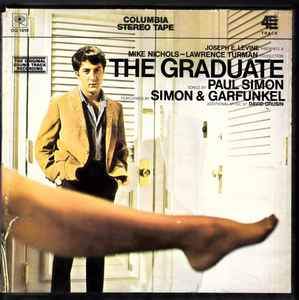
A re-watch of 1967's The Graduate a few weeks ago confirmed this for me. As iconic as the Simon and Garfunkel songs are, they are used only intermittently and quite purposefully, not as window dressing. Yes, it's ironic that its most famous song is The Sound of Silence, but the sound of silence is genuinely important in many scenes, especially some of the most uncomfortable ones. Many of the best, most intense scenes play out with no music.

In the case of A Late Quartet, I believe that letting Beethoven's music be the only music would have better underlined the otherworldly power of late Beethoven. There's something odd for me about being pulled back and forth between two musical worlds in one film, and though Badalamenti is not trying to be Beethoven, I can't help but feel that his music suffers by comparison. (In fairness, it may have been difficult enough to get a movie made about a string quartet, so perhaps they thought it helpful to portray these characters as regular people by using regular film music.)

As it happens, my favorite movie I saw this summer is a tiny little French film, Petite Maman, which boldly uses almost no music, allowing quiet scenes to play out with silence as a powerful frame for the subtleties of the story. About an hour into the 73-minute runtime, two young girls briefly discuss music while taking turns listening through headphones - we see them listen, but we hear nothing. Suddenly, an entire scene plays out scored by a bright, Europop song which....well, it's not really my cup of tea, but it still packs an incredible dramatic punch because of what has preceded. In this case, the music is very emotional and absolutely helps us understand an emotional breakthrough, but its power comes from the fact that there has been so much quiet before this moment.


Of course, there are movies in which wall-to-wall music makes sense. I rewatched the original Star Wars trilogy this summer, and John Williams' space opera score works wonders there. Just try watching these deleted scenes which have no underscoring (or sound effects or significant editing, to be fair) and one can see how much this film would not work if it relied on its screenplay and acting.


A Late Quartet also offers an opportunity to think about the contrast between diegetic music (music actually experienced as music by characters on screen) and any other type of music which is added for the viewer's benefit (?). I'll take this opportunity and any opportunity I can to observe that Christopher Guest's A Mighty Wind is the best example I know of a movie which relies almost entirely on diegetic music - the performances of the three folk groups created for this story, with the original songs sung by the actors, are the key to its magic. The songs are fun and sometimes poignant, and we feel how closely connected they are to the characters.


Of course, the structural simplicity and brevity of folk songs make it much easier to incorporate them in full than it would be with a 40-minute string quartet. It would also be far too much to ask the actors from A Late Quartet to play Beethoven for real, though they do an admirable enough job faking it, and the Brentano String Quartet's actual playing is fantastic. Nonetheless, I wish the director/producers had been brave enough to let the music speak for itself a bit more. Imagine using this frenetic Presto instead of the generic Jogging music Badalamenti wrote. Imagine letting us feel the cold New York scenery in which these lost characters live with this instead of this. As it is, the only really complete Beethoven we get is when the closing scene performance of Op. 131's finale continues all the way through the credits. 

================== 

Now to shift gears to the main thing I wanted to write about: characters writing music on screen. There's a very special subset of diegetic music which occurs when we get to see/hear a composer write the music as part of the story. It requires a good bit of hubris to think that film can really take us inside this mysterious process which, after all, probably happens most often inside a composer's head, but it's surely the kind of thing that interests people. We all would like to look inside that creative process. 

I'm going to cite three favorite examples, though I'd be curious to know if you know of others. First up, I'll steal a scene cited in a memorable sequence from That's Entertainment, Part 2. As absurd and over-the-top as it is, this imaginary carriage ride in which Johan Strauss II writes Tales from the Vienna Woods is kind of brilliant, and it's ridiculously fun to watch. I particularly appreciate how slowly it develops and that we get to see brief moments of the composer feeling stuck and unsatisfied, though these blocks are quickly removed. 


The second scene I have in mind is probably the most famous and acclaimed of its type. Although I have mixed feelings about the overall success of Amadeus as a film (mostly due to some of the acting, and a few stage-y scenes which don't play as well for me on screen), it's hard to resist the drama of a dying Mozart dictating the Confutatis maledictus to his awestruck rival, Salieri. Though Peter Shaffer's original play was enormously successful, this best scene from the film was newly written by Shaffer for the film. The playwright later admitted to regretting a few overly simplistic details (like Salieri being confused by simple tonic/dominant harmonies), but this is a great example of how diegetic music can work both as subject matter and as emotional/dramatic framing. (Also a reminder of how effective it can be to stick with the music of a composer subject for all of the soundtrack as Mozart's music is absolutely the MVP of Amadeus.) 

Now, having gone from the ridiculous to the sublime, it might seem like I'm lazily settling back into the ridiculous, but this final scene is actually the most successful composition scene I can think of, and it comes not from stage or the big screen but from a 1970's sitcom. Somehow, in about three minutes, the brilliant Tony Randall convincingly writes an entire song. A very stupid, silly song, yes, and with more emphasis on the development of the lyrics, but a song nonetheless, with references to leitmotif, melodic direction, and word painting along the way. I, of course, have no business posting this video but I couldn't find it elsewhere and so far YouTube has only notified me that copyrighted content is recognized - it's not taking it down. The songwriting begins around 1:58, although I've included part of the opening scene for context - especially as it lets us hear a sample of Felix's previous songwriting prowess.


Now that's a strange line-up: Cartoonish Johann Strauss, Melodramatic Mozart, and giddy Tony Randall, but I think it shows an interesting variety of ways in which the composing process can be shown to viewers. Let me know what I've missed!

====================

* P.S. There are a few high-profile classical music movies on the horizon. Tár, starring Cate Blanchett as a fictional composer/conductor is coming out soon and Maestro, Bradley Cooper's biopic about Leonard Bernstein, is set to arrive in 2023.

P.P.S. Another famous movie/theater song supposedly written on the spot is Do-Re-Mi, though it arrives too fully formed to seem like something in process. (Although maybe with more time Maria could have done better than "LA, a note to follow SO," which seems lazy and also messes up the solfège since in this case SO is sung on TI.)

P.P.P.S. One could make the case that this documentary scene shows a new song, Get back, coming to life before our eyes. Of course, this vernacular style lends itself more naturally to "writing out loud" than do many other styles of music. 

P.P.P.P.S. I once wrote here about my then Top 13 Movie list with brief discussion on the role of music in each.